Issues to Watch 2026 – Trade Diversification
Prime Minister Mark Carney has laid out his intentions to double Canada’s non-U.S. trade over the next decade, stating that our nation’s “decades-long process of an ever-closer economic relationship with the United States is now over.”
Last year, Canada’s non-U.S. trade amounted to $300 billion. 2026 will mark the first full year of Canada trying to pivot away from the U.S. and achieve $600 billion worth of trade with other countries.
Paradoxically, the first step in the road to $600B begins with CUSMA renegotiations. The first joint review of the Canada-United States-Mexico Agreement (CUSMA) will occur in 2026. It will take place against a challenging economic backdrop. Businesses continue to face supply chain challenges, U.S. tariffs, and low economic growth. These headwinds highlight the importance of a modernized trade framework that reinforces certainty, competitiveness, and investment needed to support resilient North American supply chains.
Certainty on the Continent
Certainty is a prerequisite for strong international trade. Whether or not the U.S. administration wants to acknowledge it, the economies of Canada, Mexico, and the U.S. are deeply integrated. Every day, nearly $3.6 billion in goods and services cross the border, and the U.S. remains Canada’s largest foreign investor. Canada is also the largest foreign supplier of energy to the U.S.
British Columbia facilitates the movement of people and goods to and from key North American markets day in and day out. In 2024, trade between B.C. and U.S. states totalled $54 billion. This bilateral trade supports over 270,000 jobs across the province. For Vancouver businesses to succeed in global trade, maintaining stability and certainty in the cross-border investment climate, especially with the U.S., is critical.
A good CUSMA deal is the first step in the road to $600B – that must be a key focus of the Prime Minister and the federal government this year.
The Provincial Pathway
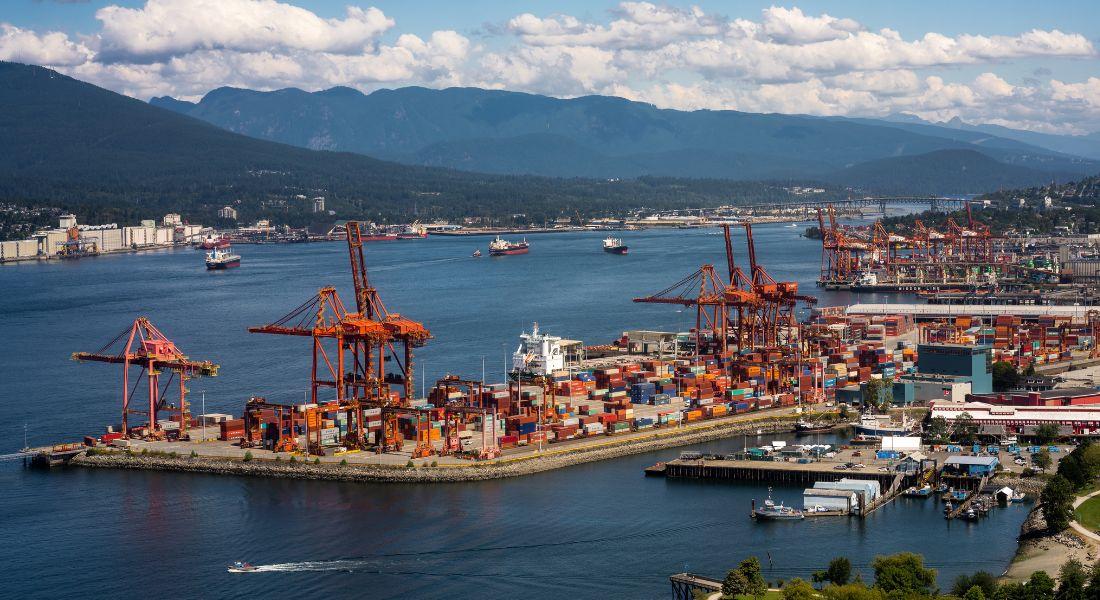
B.C. has an envy inducing amount of opportunity and potential. We are the economic engine of the West, home to an abundance of natural resources, a world class talent-pool, and powered by globally connected gateways – the Port of Vancouver and the Port of Prince Rupert – which are the largest and third largest Canadian ports respectively.
And so, as CUSMA is renegotiated, the provincial and federal governments need to work together to ensure that our supply chains and trade enabling infrastructure are in top conditions — polishing, upgrading, and expanding them where necessary.
While this includes plenty of difficult work – like landing capital investments - there are plenty of items that can provide a lot of value for relatively little work - ‘low hanging fruit’ for lack of a better descriptor.
When we speak of international trade, especially in B.C.’s context, we often think of our major companies and natural resources. Yes, Canadian resources are sought after across the world, but that is not the only thing we can sell. Ensuring that our manufacturers and small/medium sized businesses have the know-how and expertise to expand their market outreach and enter new markets will be crucial on our road to $600B.
Through our World Trade Centre – Vancouver (WTC-V), with the support of the province of B.C. and Canada, we help small businesses export to new countries for the first time and get the skills they need to export. The Trade Accelerator Program (TAP), our flagship export training initiative has graduated over 600 companies. On average, the export revenue of those who attended TAP has increased by 23%, and participants forecast their export sales to grow by 47%. Reliable and sustainable funding for programs like these are critical in diversifying our trade and growing our local economy.
Low Hanging Fruit
A top objective of the province's recently released industrial strategy, Look West, is to grow agriculture and food exports by 25%, and expand non-U.S. market exports by 25%. We've long advocated for the removal of the 50-50 rule which dictates that at least 50 per cent of a processed product must originate from the very farm on which it is processed. This makes investments to scale processing capacity unfeasible and forces some of our growers into the absurd position of sending their locally grown produce across the border to the U.S. for processing, only to buy it back at a higher cost. It also simultaneously undermines our food security and the goals set out by this government.
At the time of publication, the rule remains in place thanks to 16 words in the regulatory framework governing agriculture in British Columbia. With the stroke of a pen, we could exchange 16 words for an estimated $1 billion in investments for food processing and manufacturing. Like we said - low hanging fruit, ripe for picking.
Conclusion - The Road to 600
Canada’s push to double non-U.S. trade will not happen by chance, but rather by design. A steady hand during CUSMA renegotiations to achieve continental certainty and a provincial strategy that clears the path for businesses of all sizes to compete globally are paramount. The first year of this pivot will test whether we can stabilize our important trade relationship while laying the groundwork for diversified growth abroad.
British Columbia has a central role to play. Our province anchors North American supply chains, connects Canada to the world, and holds some of the clearest opportunities to accelerate progress toward the $600 billion target. Securing a strong CUSMA framework will protect the stability that B.C. exporters rely on every day. Improving the condition of our trade infrastructure will ensure that our ports, roads, and rail corridors can carry more of what the world wants to buy from us. Modernizing outdated rules, such as the 50-50 processing requirement, will unlock investments that support food security and create new export capacity at home.
Meanwhile the results of TAP and WTC-V show that many of the gains Canada is searching for already exist in our local businesses. With consistent support, these firms can scale their exports, diversify their customer base, and contribute directly to the national goal. In short, the road to $600B is not a single policy or a single negotiation. It is a coordinated effort that blends federal leadership, provincial action, and the ingenuity of Canadian businesses.