Local Businesses Identify Top Priorities Ahead of 2026 Municipal Elections

With the next municipal election on the horizon, the local business community is sending a clear message about the issues it wants municipal leaders to address.
A recent survey of our members found that businesses are seeking greater fiscal discipline from local governments and support policies that make it easier to do business, strengthen economic competitiveness, invest in critical infrastructure, and provide value for taxpayers.
While municipal elections often receive less attention than provincial or federal campaigns, local governments make decisions that directly affect residents and businesses. From property taxes and permitting timelines to transportation networks, public safety, housing, and infrastructure, municipal policies help shape the conditions that determine whether communities can thrive.
Survey respondents ranked the ease of doing business as an issue that should be the top municipal priority, followed closely by economic development, attracting investment, and infrastructure development.
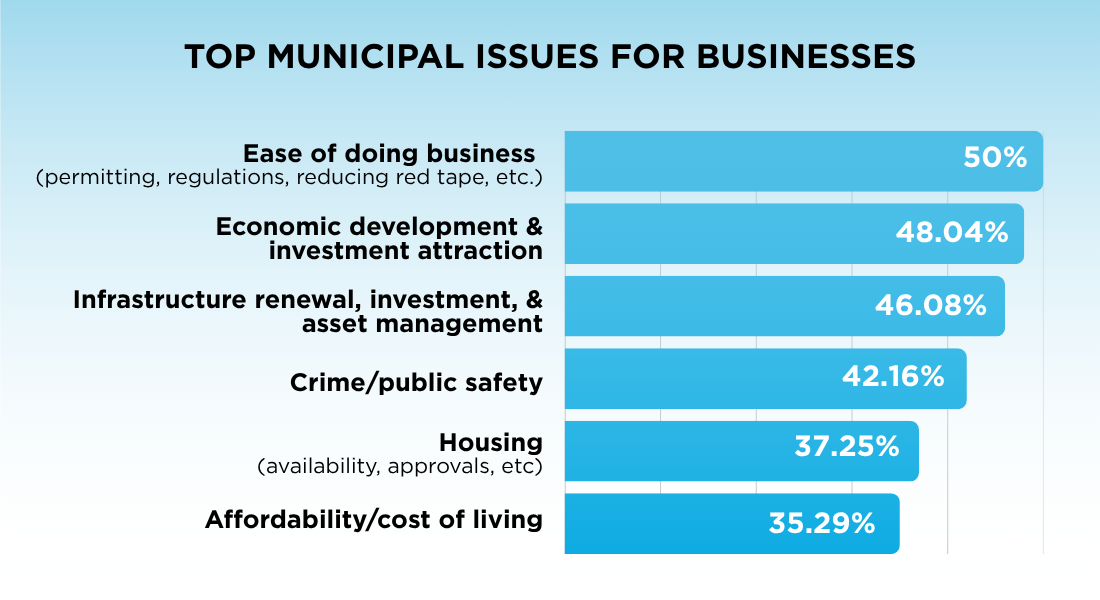
These findings reflect the important role local governments play in supporting economic growth. Efficient processes, predictable regulations, and investments in infrastructure all influence whether businesses choose to invest, expand, hire, and innovate in Vancouver. As competition for talent and investment intensifies across North America, respondents signaled that maintaining Vancouver's competitiveness should remain a key focus for municipal leaders.
When asked how satisfied they were with municipal politicians' handling of various issues over the past five years, respondents were most satisfied with the delivery of core municipal services, particularly cleanliness and garbage collection.
Homelessness emerged as the area of greatest dissatisfaction. While caring for the unhoused and ensuring support is available is a complex challenge that requires coordination among all levels of governments, respondents clearly identified it as an issue requiring continued attention and action at the municipal level.
The survey revealed mixed views on public safety. While some respondents ranked municipal politicians' response to public safety among the five areas they handled best, others ranked it among the five areas they handled worst.
Perceptions were similarly split when participants were asked to rate overall public safety conditions, suggesting a wide range of experiences and perspectives across Vancouver's business community. The top safety issues affecting business operations include street disorder and safety perceptions, employee and customer safety concerns, and vandalism and property crime.
The top municipal measures businesses would like to see more of include partnerships for mental health and social supports, coordinated policing and bylaw presence, and lighting, maintenance, and activation of public spaces.
Business owners continue to face significant operational challenges, with respondents identifying compliance and administrative burden, property taxes, and permitting delays as the top cost pressures affecting their organizations.
The findings reinforce the importance of efficient municipal processes and service delivery. Delays in permits, approvals, and administrative requirements can increase costs, reduce investment certainty, and create barriers to business growth. Respondents clearly indicated that improving municipal efficiency should be part of the broader conversation about supporting a healthy local economy.
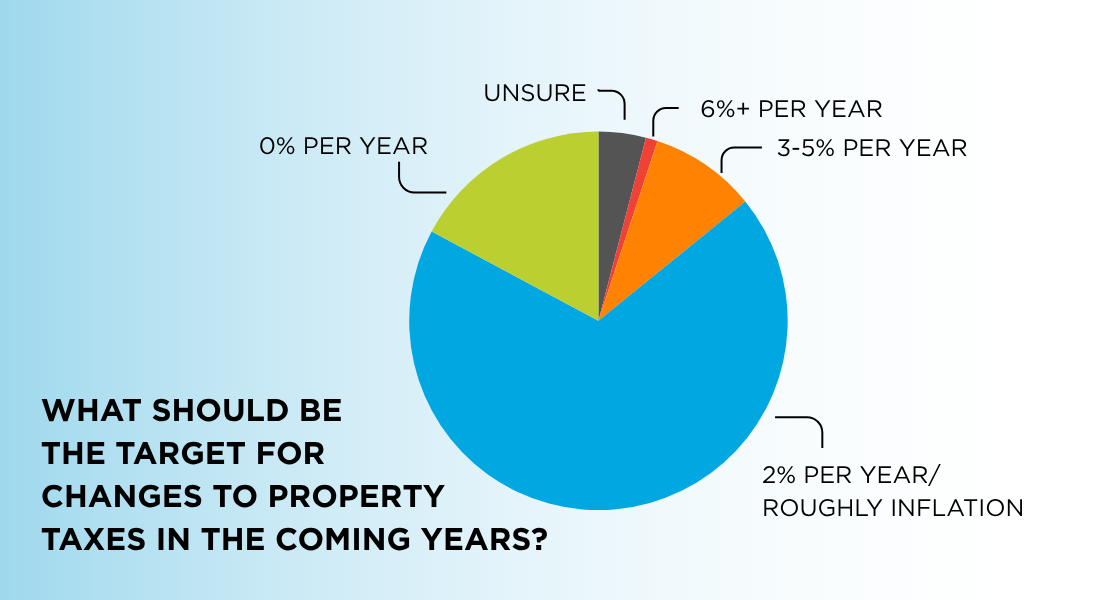
The survey also found strong support for a balanced approach to municipal finances. Approximately seven in 10 respondents believe annual property tax increases should be limited to roughly two per cent per year, consistent with inflation. At the same time, respondents expressed support for an additional two per cent infrastructure fund financed through property taxes, indicating a willingness to invest when there is a clear connection between taxation and community infrastructure.
When asked about operating budget priorities, respondents selected engineering and public works, permitting capacity and service improvement, and police as the top areas.
For the city's capital plan, respondents ranked the following as their highest priorities: streets and transportation infrastructure, including roads, bridges, sidewalks, parking, bus lanes, and bike lanes; housing-related infrastructure and facilities; and community facilities.
Together, these findings point to a desire for disciplined fiscal management paired with investments that improve service delivery, mobility, and long-term community growth.
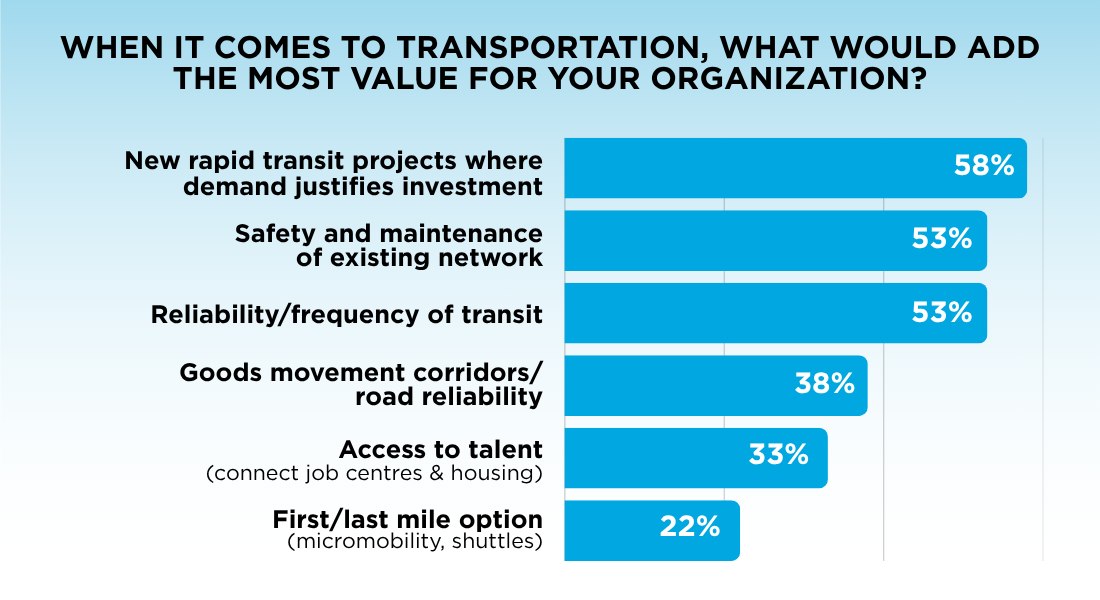
Considering transportation, respondents expressed the strongest support for new rapid transit projects where demand justifies investment, alongside continued focus on the safety and maintenance of the existing transportation network. Reliable transportation infrastructure is critical for moving people and goods efficiently throughout the region and supporting economic activity, including trade.
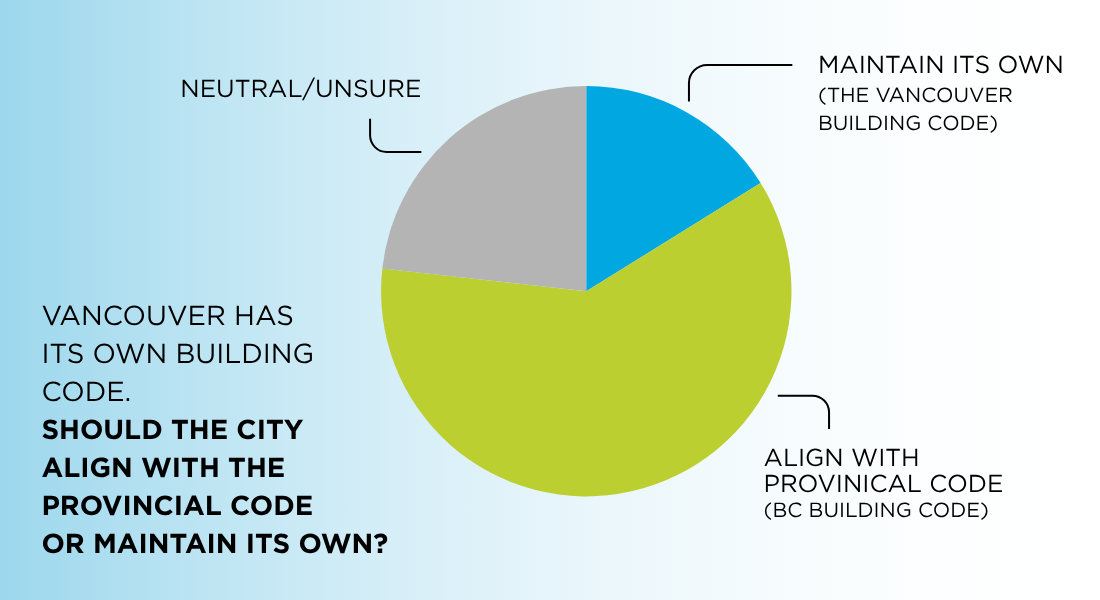
From a policy perspective, the survey also found that more than 60 per cent of respondents support aligning the Vancouver Building Code with the BC Building Code, reflecting interest in greater consistency and efficiency across the region.
On housing policy, more than half of respondents oppose municipalities acting as residential housing developers, of which 38 per cent strongly oppose, indicating a preference for municipal governments to focus on enabling and facilitating housing delivery rather than serving as direct developers.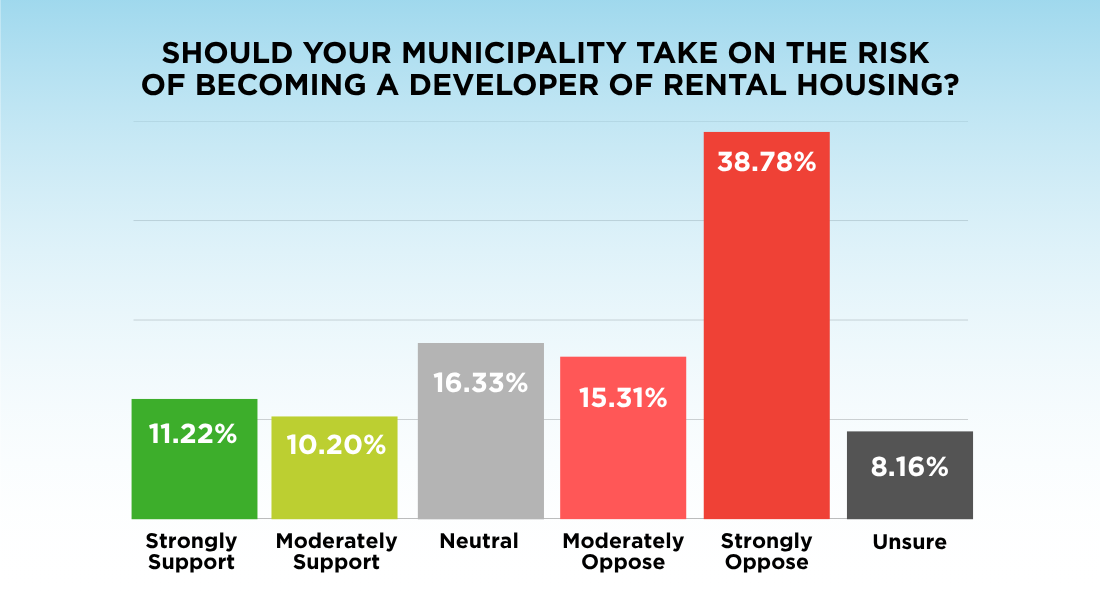
Respondents also weighed in on several governance-related issues.Approximately half expressed support for abolishing the Vancouver Park Board, while about one-third opposed the idea.
The survey also found that roughly half of respondents support some form of municipal amalgamation within Greater Vancouver. At the regional level, respondents identified greater cost control and financial oversight as the top organizational priority for Metro Vancouver Regional District.
As Vancouver moves toward its next municipal election, the survey results offer a snapshot of the priorities and concerns of the local business community. Respondents are calling for a city that is competitive, efficient, fiscally responsible, and prepared to invest in the infrastructure and services needed to support future growth.
Most importantly, the findings highlight the importance of civic engagement. Municipal governments make decisions that affect economic opportunity, neighbourhood vitality, public safety, affordability, and quality of life.
By participating in local elections and engaging in public dialogue, residents and businesses have an opportunity to help shape the future of Vancouver. The choices made at city hall matter. Ensuring that voters are informed and engaged is essential to building a stronger, more prosperous, and more resilient Vancouver for everyone.