LOT survey highlights barriers for young people entering B.C.’s workforce

Young people are doing what they were told would lead to opportunity. They are getting an education, building resumes, and trying to enter the workforce. But for many in B.C., the first step into a meaningful career is becoming harder to reach.
A survey conducted by a group of Greater Vancouver Board of Trade Leaders of Tomorrow (LOT) students reinforces the growing challenges young people face in the provincial job market. While many youth are highly educated and actively searching for work, they are encountering underemployment, limited work experience, intense competition, and unequal access to professional networks.
LOT students Sara Alaviyeh, Janelle Dalberry, Xian Kostyrko, Tate Laxton-Coglon, Emma Martin-Rousselle, Mashal Narsi, Gian Gunawan Putra, Ethan Van Dyk, and Cathy Yan worked together to better understand the employment landscape for youth aged 15 to 30 in the Lower Mainland. Their research was guided by two central questions: how are young people looking for jobs, and what barriers do they face in finding employment?
The group conducted a 43-question survey over six weeks. Of the respondents, 55.7 per cent hold a bachelor’s degree, 19 per cent hold post-graduate credentials, and fewer than five per cent hold only a high school diploma. The sample also reflected a diverse group of young people, with 40 per cent identifying as members of a visible minority or racialized group, 14 per cent as members of the 2SLGBTQIA+ community, four per cent as Indigenous, and 2.5 per cent as a person with a disability.
The findings show that education alone is not enough to secure a clear path into employment. Many respondents reported difficulty accessing entry-level opportunities, even after completing post-secondary education. More than half said employers have unrealistic expectations for entry-level roles. Many also reported feeling underemployed, with 54.5 per cent not working in their preferred field and 23.6 per cent working below their skill level. 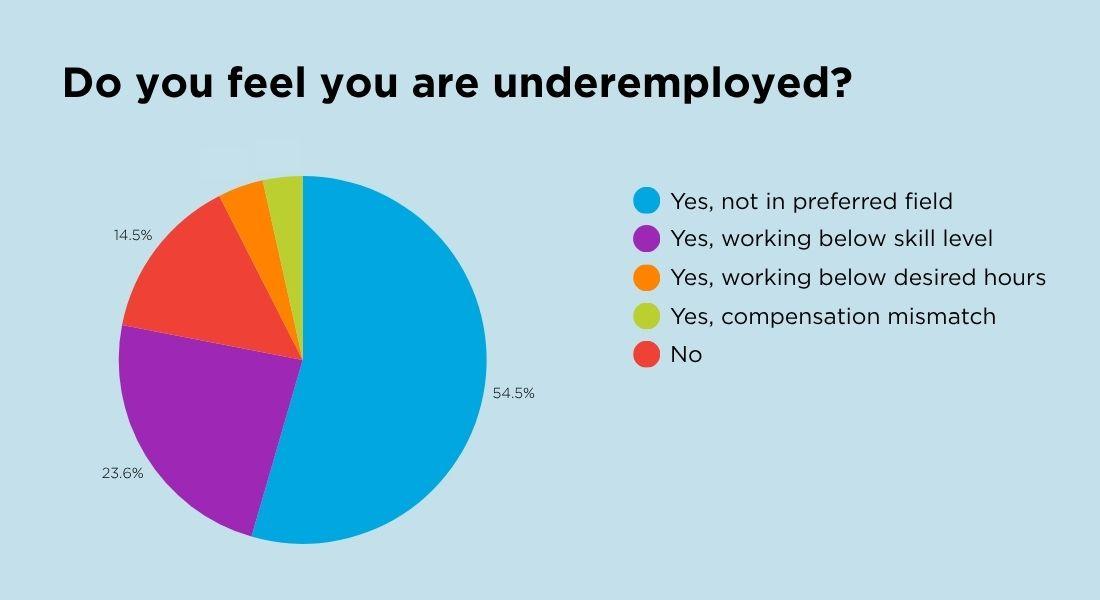
Experience also remains a key challenge. While 57.5 per cent of respondents had completed a co-op or internship related to their field, many still struggled to move through hiring processes. Sixty-seven per cent reported difficulty progressing beyond the resume screening stage, and 70 per cent submitted more than 30 resumes before receiving an offer. Of that group, 12.5 per cent submitted more than 200 resumes.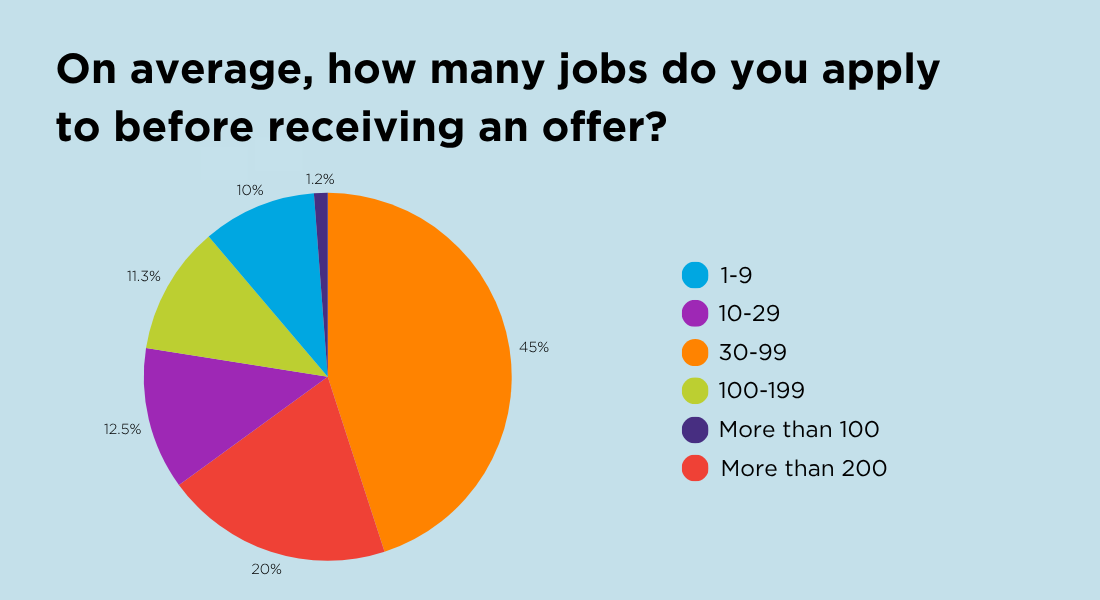
For unemployed respondents, job searching is not a casual effort. Forty per cent reported spending 11 to 20 hours per week looking for work, while 33 per cent spent six to 10 hours per week. This suggests that young people are investing significant time and effort into finding employment, without predictable results.
Competition was identified as the biggest employment barrier, cited by 57.5 per cent of respondents. Another 17.5 per cent pointed to lack of experience or qualifications, while 15 per cent identified limited job openings in their field. These findings suggest youth unemployment is shaped by broader structural conditions, including limited entry-level roles, high competition, and employer expectations that may not align with early-career realities.
Networking emerged as one of the most useful job search methods. Respondents rated networking through friends and family as helpful, while directly contacting employers was also seen as moderately helpful. However, 68.5 per cent said limited networks affected their job opportunities. This creates an uneven playing field. If networks are one of the most effective ways to access work, young people without family or professional connections in their field are at adisadvantage.
Affordability is also limiting opportunity. In total, 70 per cent of respondents direct at least 31 per cent of their income toward housing. For young people who are early in their earning years, and often underemployed or working part-time outside their field, high housing costs reduce the financial flexibility needed to search for jobs, relocate, accept lower-paid entry-level roles, or pursue further training.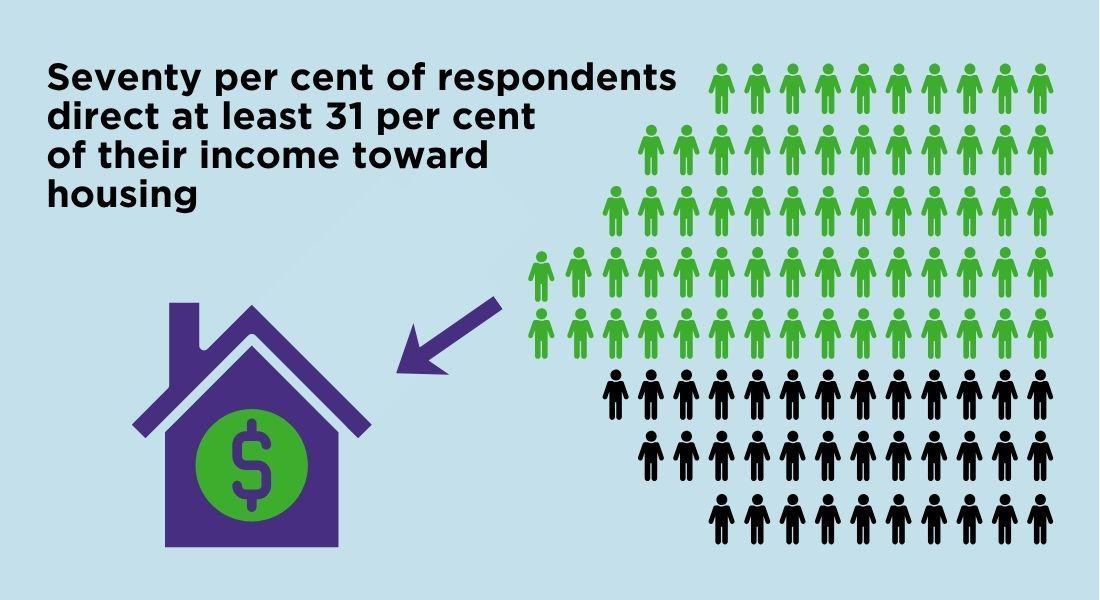
Other barriers included education or credential recognition, cited by 46.6 per cent of respondents, health conditions or disability at 33 per cent, language barriers and financial constraints at 22 per cent each, and discrimination or bias at 19.2 per cent. These results show that youth employment barriers are not experienced equally. Outcomes can be shaped by immigration background, disability, language, income, discrimination, and access to professional networks.
Despite these challenges, many respondents remain optimistic about their future career prospects. But optimism alone cannot solve a difficult labour market.
The LOT group recommends convening proactive employment working groups that bring together government, education, and industry to respond to current market conditions and strengthen longer-term entry-level pathways for young professionals in Vancouver.
The group also recommends temporarily alleviating hiring costs for entry-level roles by redeploying provincial wage subsidies for employers. This would help reduce the cost and risk of training young professionals, with the measure remaining temporary until youth unemployment meaningfully improves.
These findings come at a time when youth unemployment in B.C. is a growing concern. Recent reporting has shown there are 51,000 fewer young people working in B.C. than in 2019, while the number of unemployed youth has risen by 23,000 and 85,000 youth are not in the workforce at all. This deterioration matters not only for young people, but for B.C.’s long-term economic growth, which depends on a strong and connected labour market.
As students and recent graduates enter a difficult job market, they need access to the tools, skills, experiences, and networks that help turn education into opportunity. The Greater Vancouver Board of Trade’s Leaders of Tomorrow program helps final-year post-secondary students build those connections and prepare for purposeful, impactful careers.
To learn more about Leaders of Tomorrow, visit our LOT webpage.