Three Takeaways from Prime Minister Mark Carney on B.C.’s Economic Future
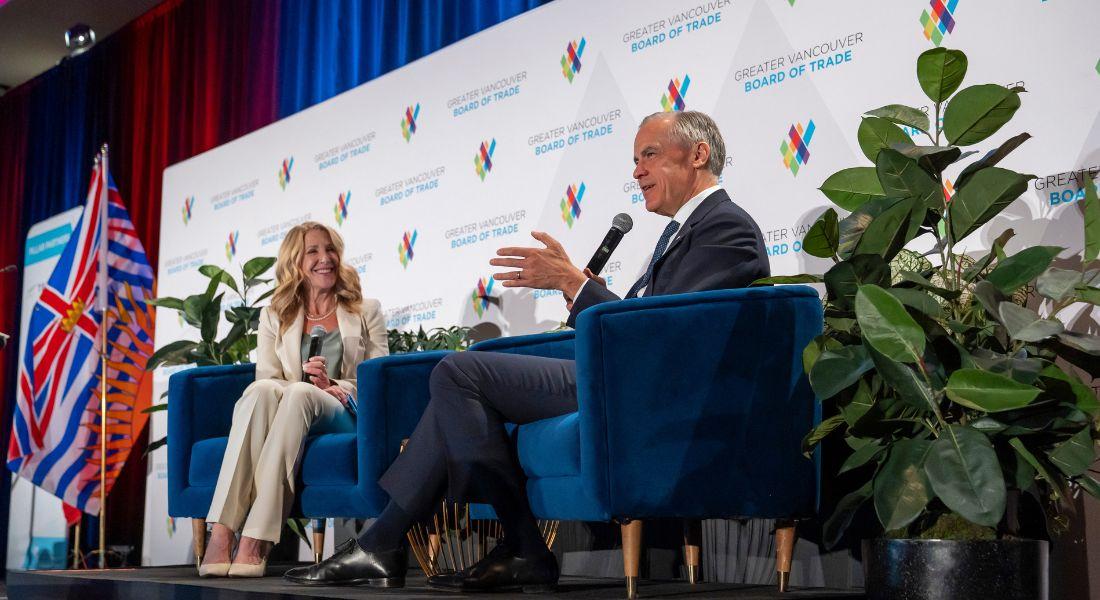
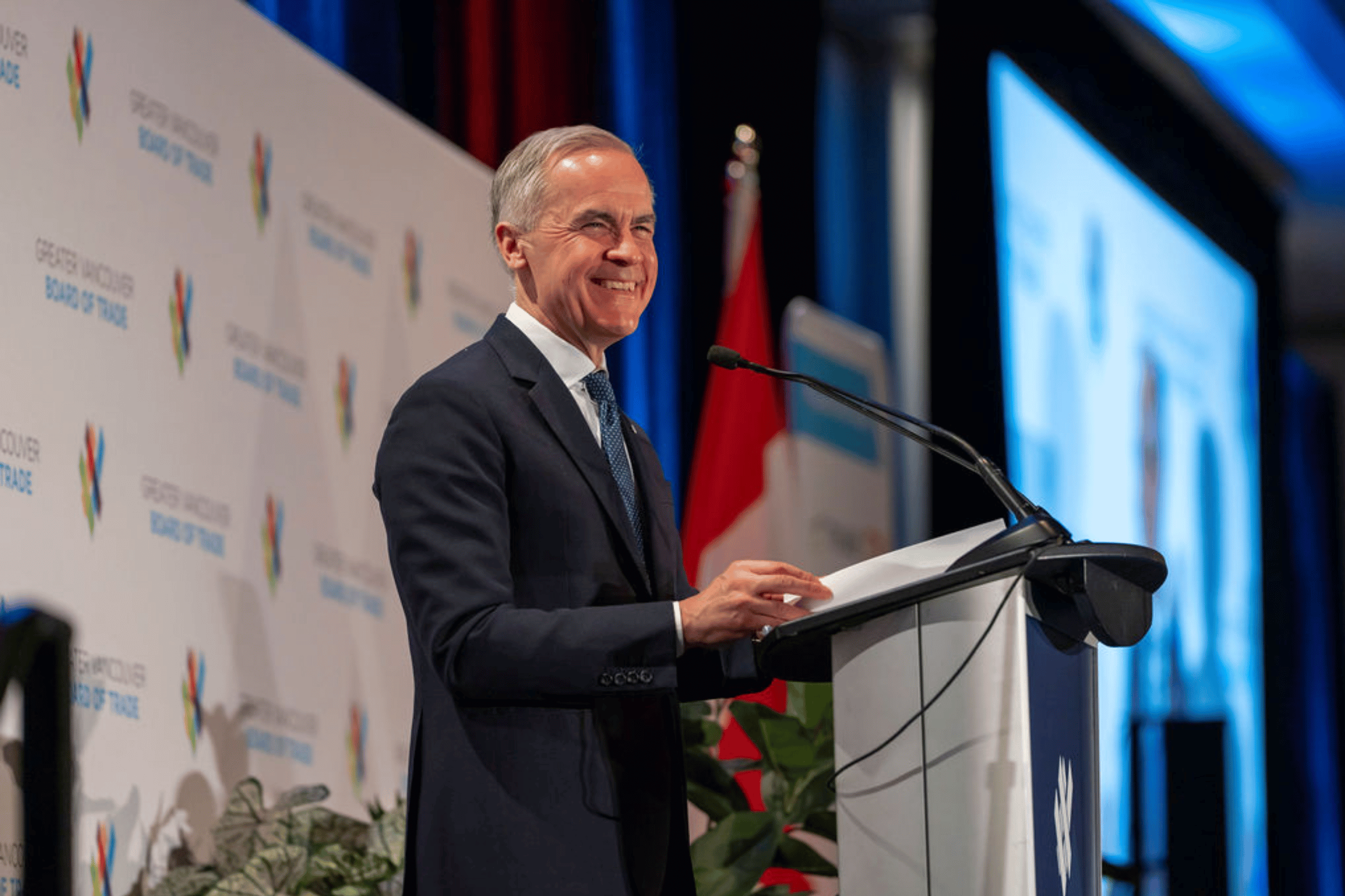
On May 20, the Greater Vancouver Board of Trade welcomed Prime Minister Mark Carney for his first address to the region’s business community.
Set against a backdrop of global trade uncertainty and a shifting geopolitical landscape, the event convened industry and government leaders for a timely conversation on how Ottawa plans to leverage Canada’s clean energy advantage to strengthen the national economy. We took this opportunity to make it known that B.C. is ready to deliver.
GVBOT President and CEO Bridgitte Anderson told the Prime Minister that our business community is ready to mobilize and put the federal agenda into action. We want to build, diversify trade, unlock responsible resource development, and deliver LNG to the world. From the historic grease trails and river networks to the gold rush and the first commercial shipment of lumber bound for Australia more than 160 years ago, trade has always defined the west.
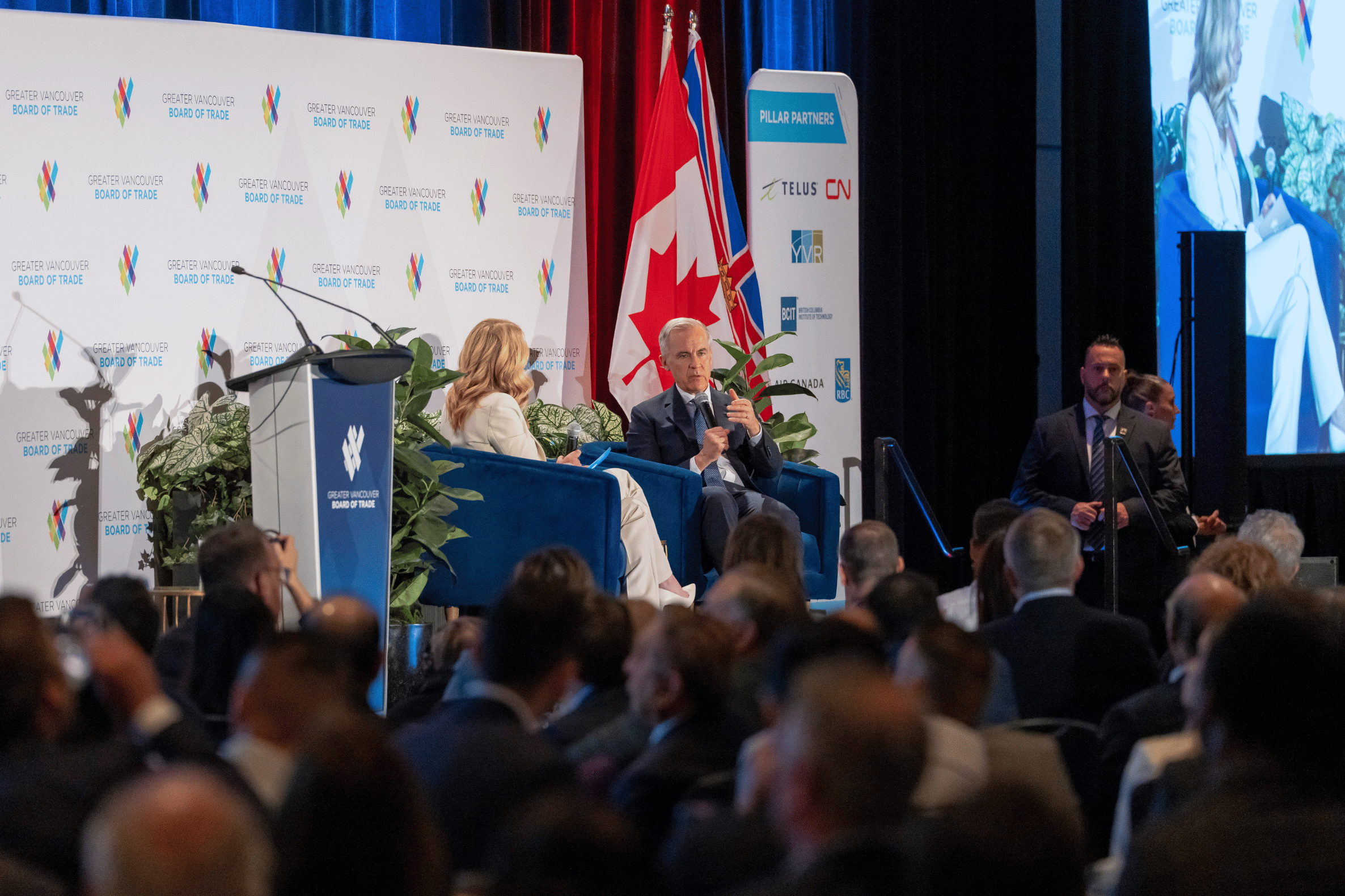
This theme took centre stage during Anderson’s Q&A with the Prime Minister. Here are our three takeaways from the discussion.
B.C. Has a Major Energy Opportunity
Carney characterized our current moment as a three-dimensional global energy crisis defined by affordability pressures, energy security challenges, and the long-term transition to net-zero. Canada, and B.C. in particular, is positioned to be part of the solution.
“The head of the International Energy Agency, Fatih Birol, said that Canada has a golden opportunity, I quote, with many cards to play. And much of that hand, that card playing hand, is held here in British Columbia,” Carney said.
B.C.'s reputation as a reliable, low-carbon energy provider, combined with Canada's stability as a trading partner, creates new opportunities for exports and investment, he added. Capturing this opportunity requires federal acceleration of major projects and infrastructure development. For B.C., this translates into concrete federal support including investment tax credits, supportive financing, coordinated environmental assessments, and financing for Indigenous equity participation.
One-third of the 22 major projects being fast-tracked through Ottawa's nation building strategy are in B.C. — a signal, Carney suggested, of just how much momentum is already building.
“What we're trying to accomplish is we don't want to hear what people are against. We want to hear what they're for, and if you're for something, we will get behind you.”
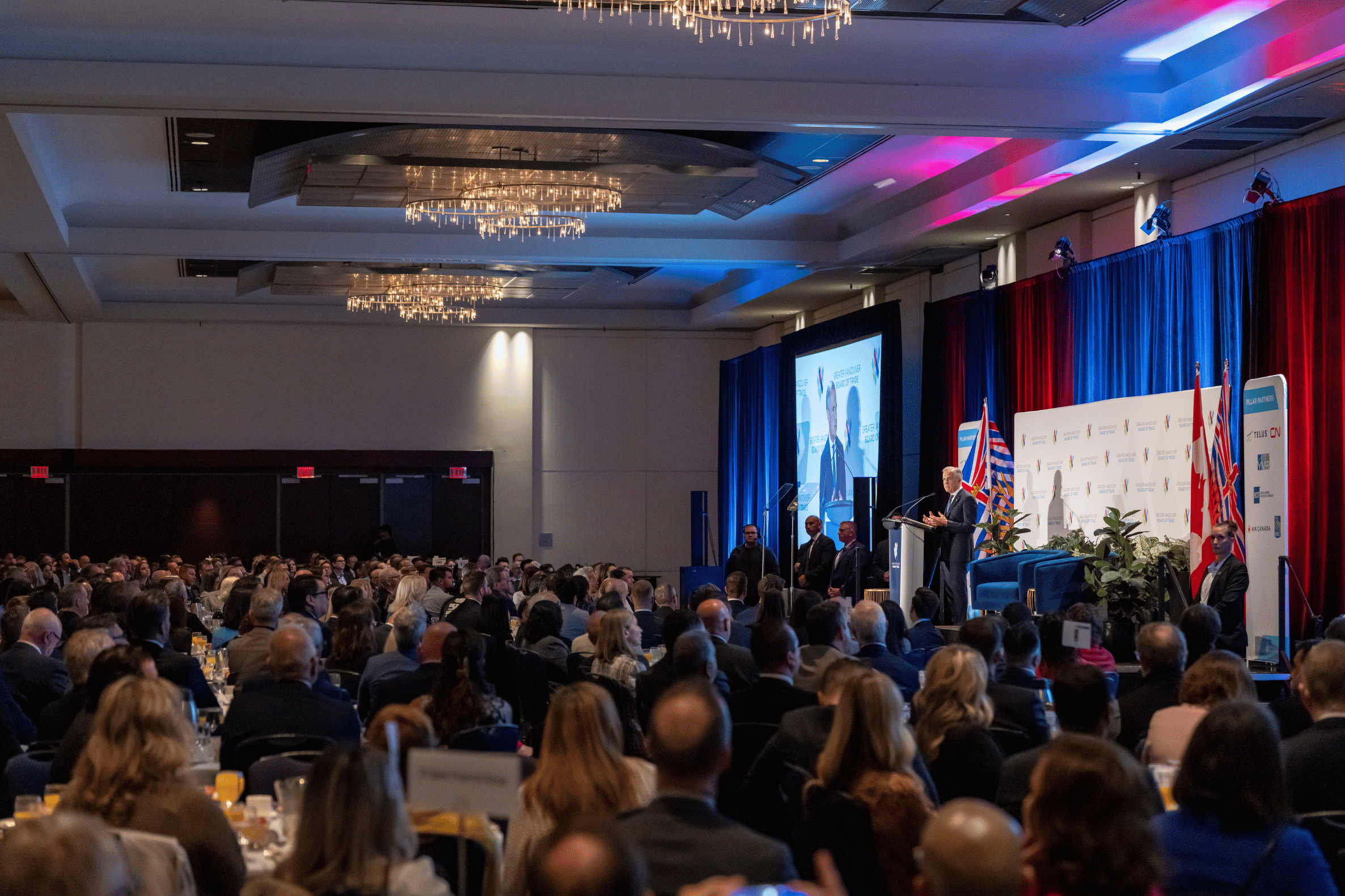
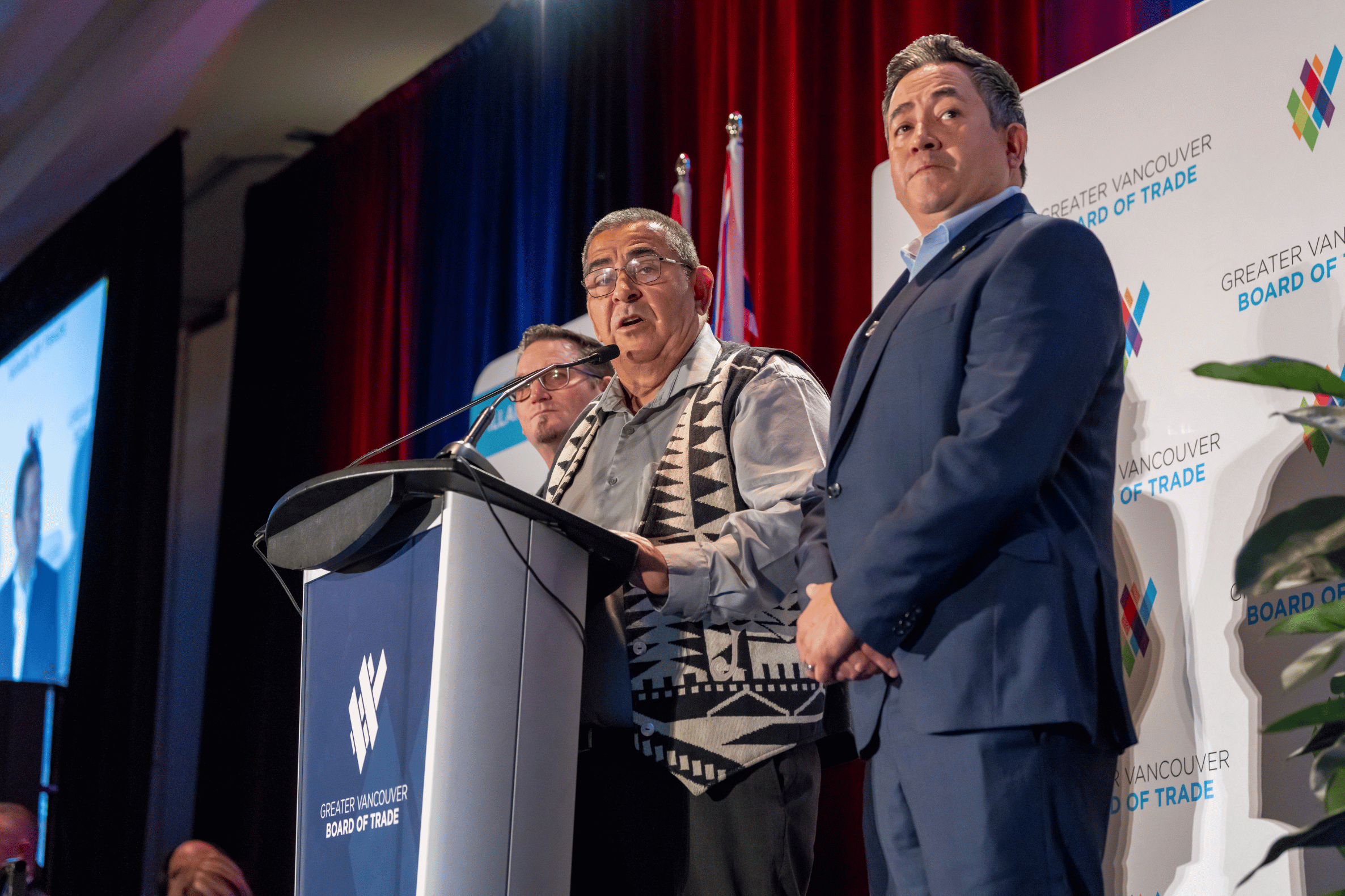
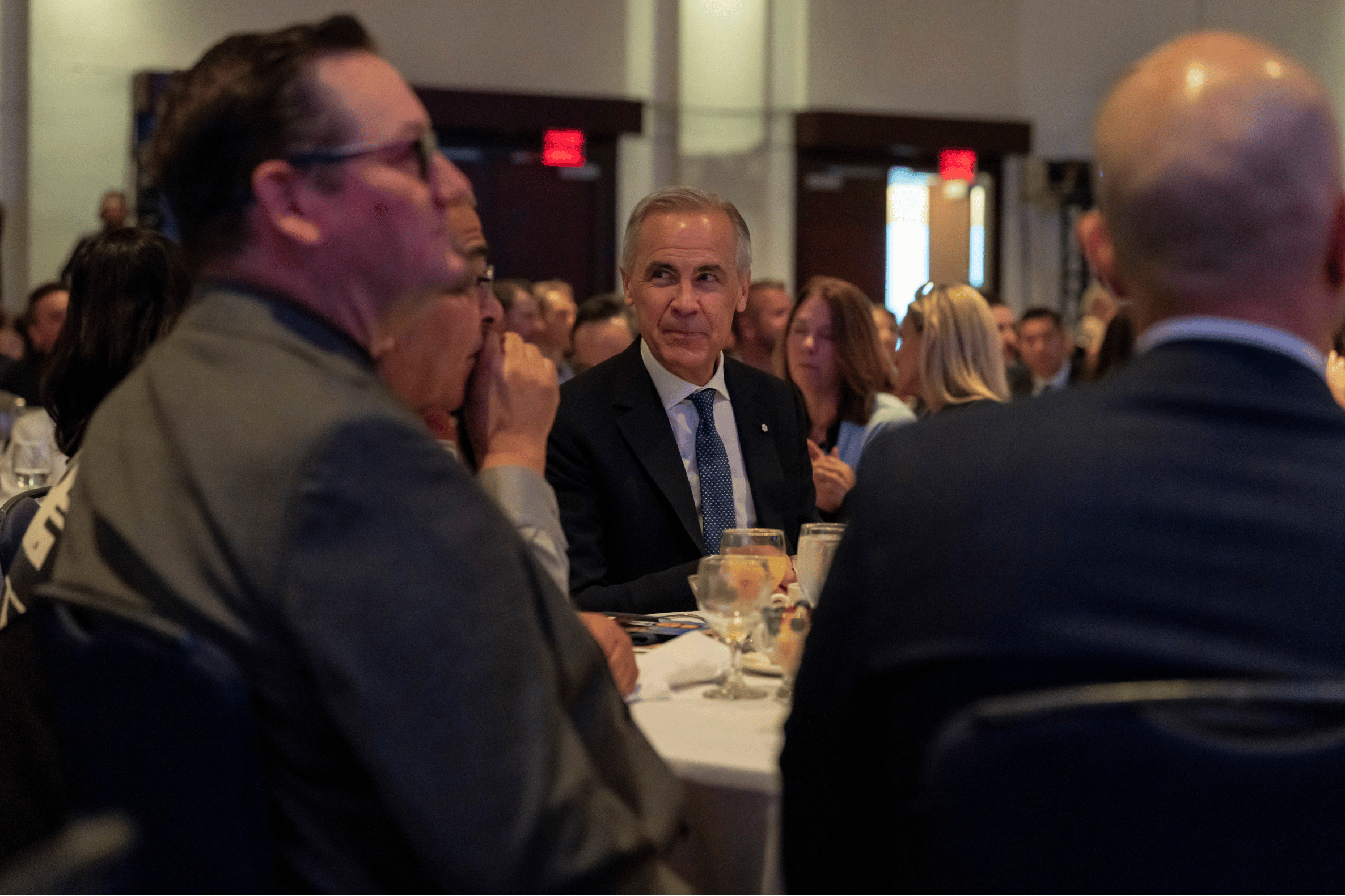
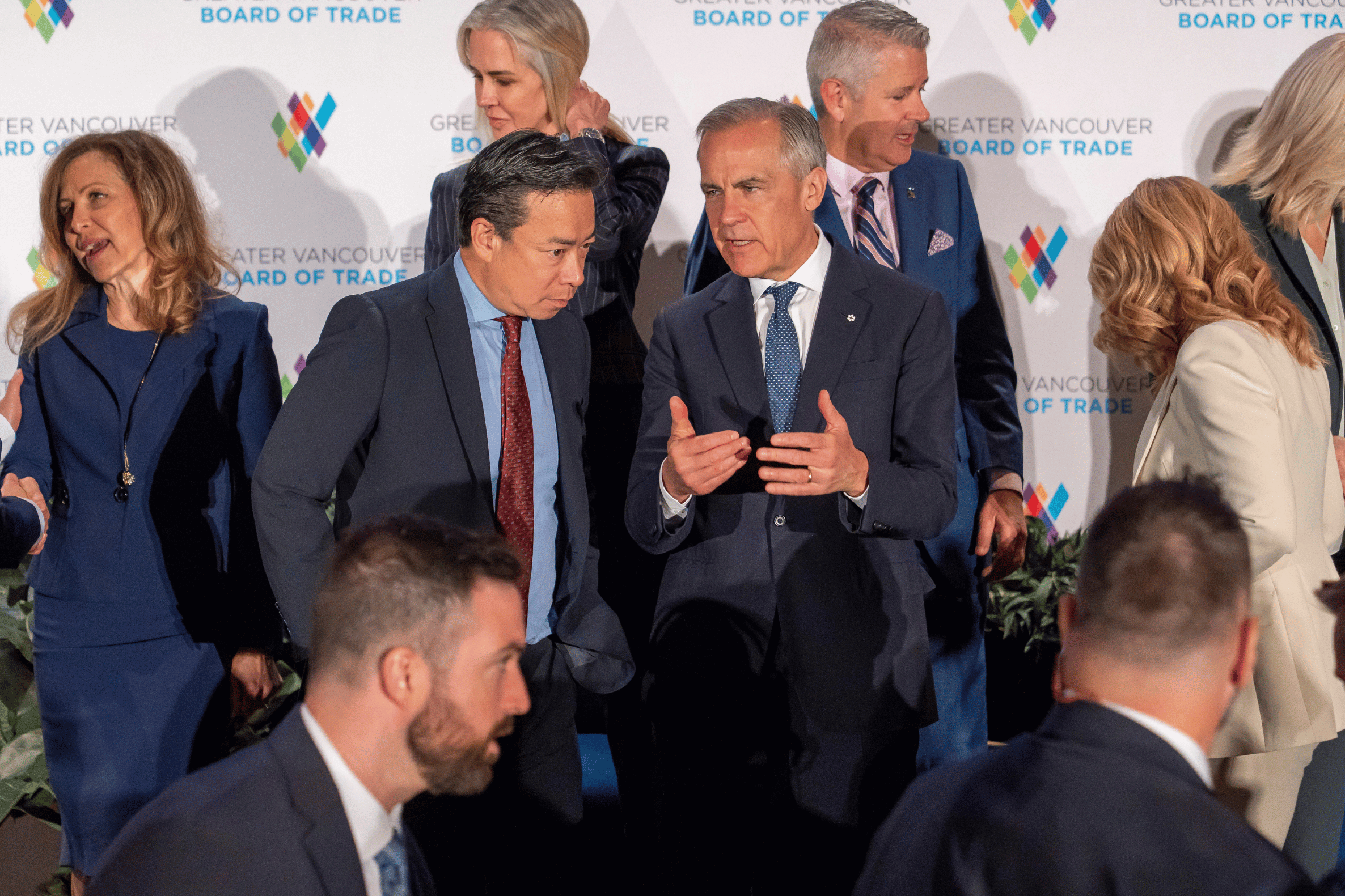
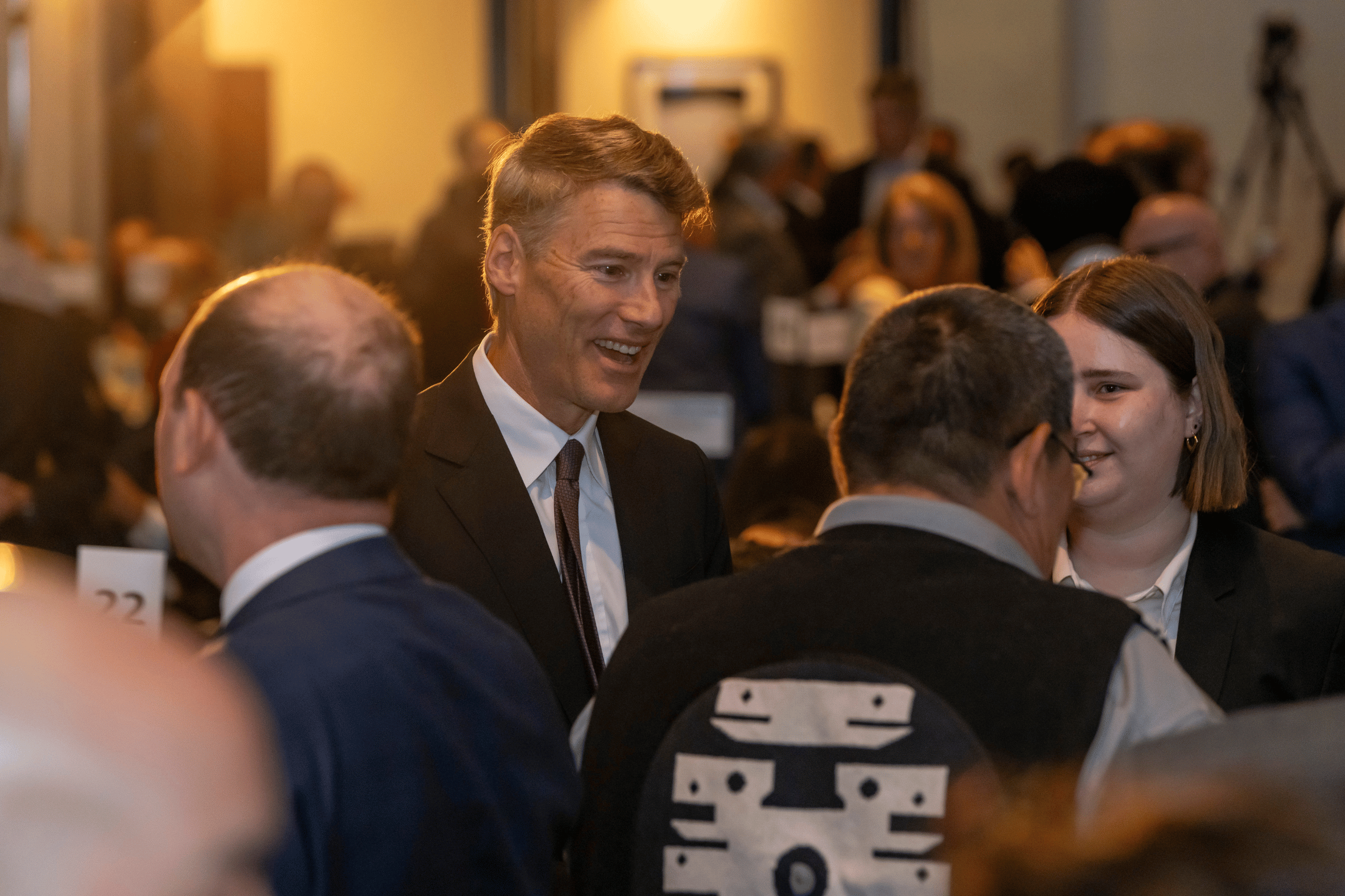
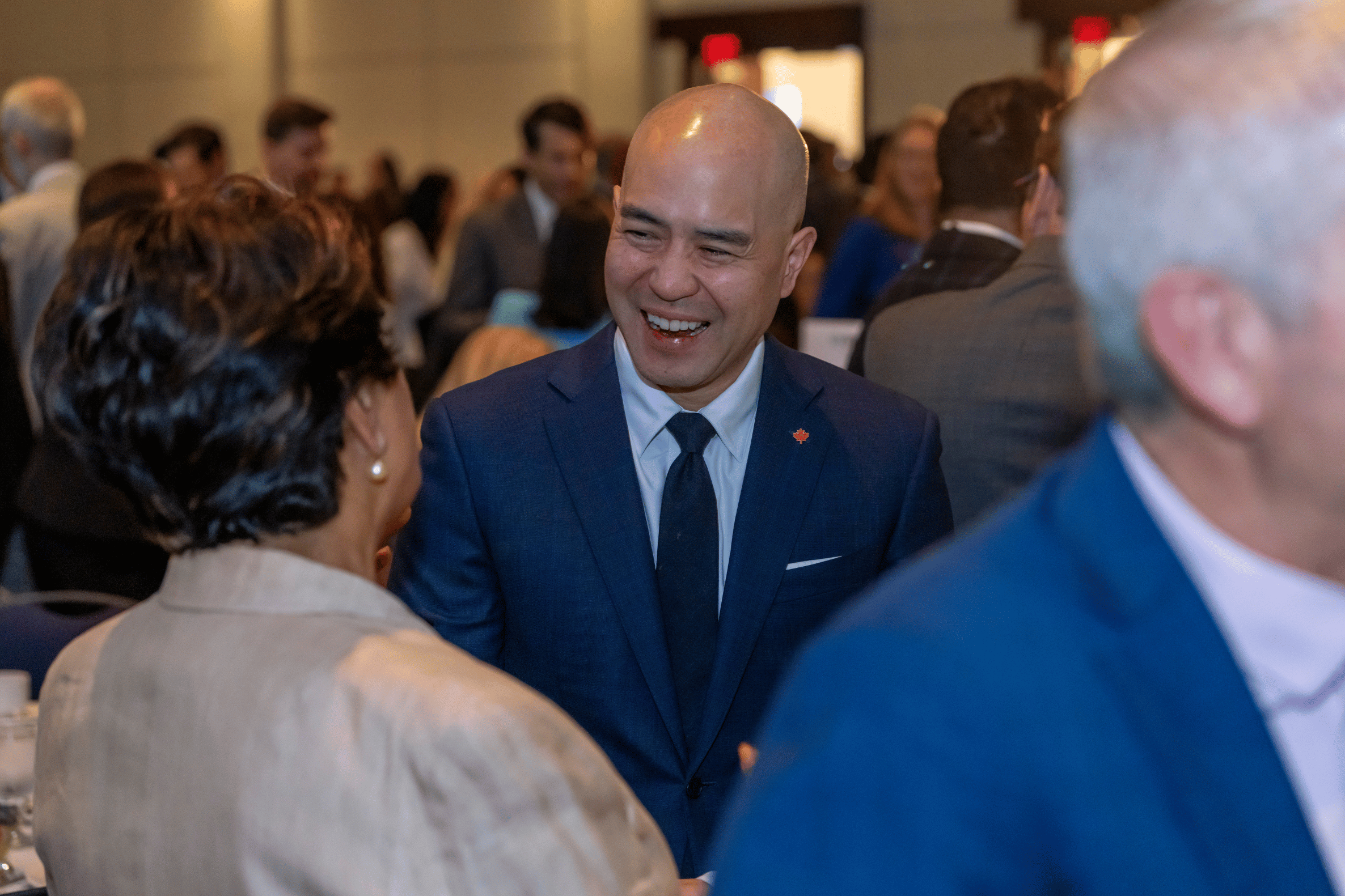
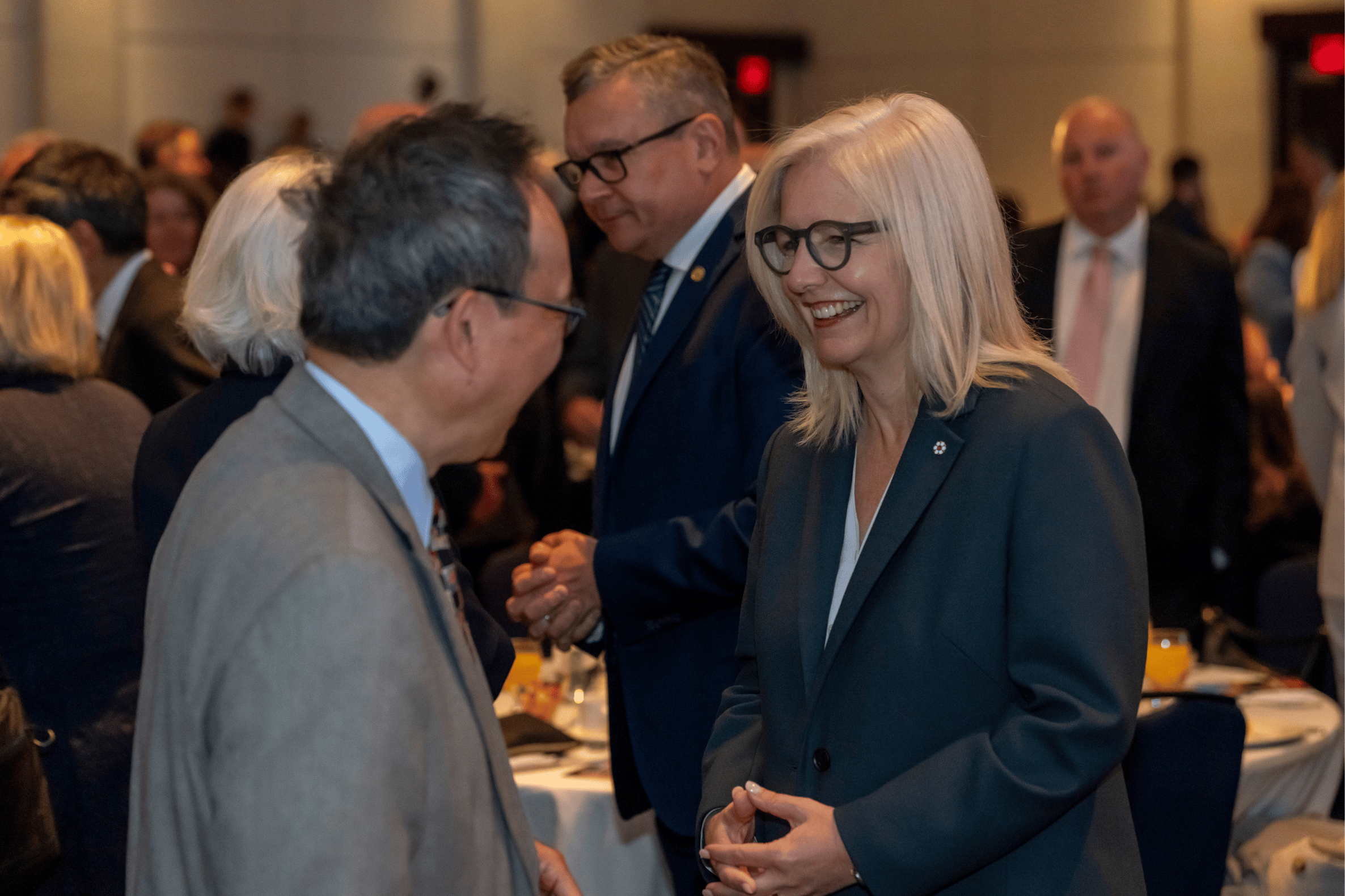
A look Inside 'A Conversation with Prime Minister Mark Carney'
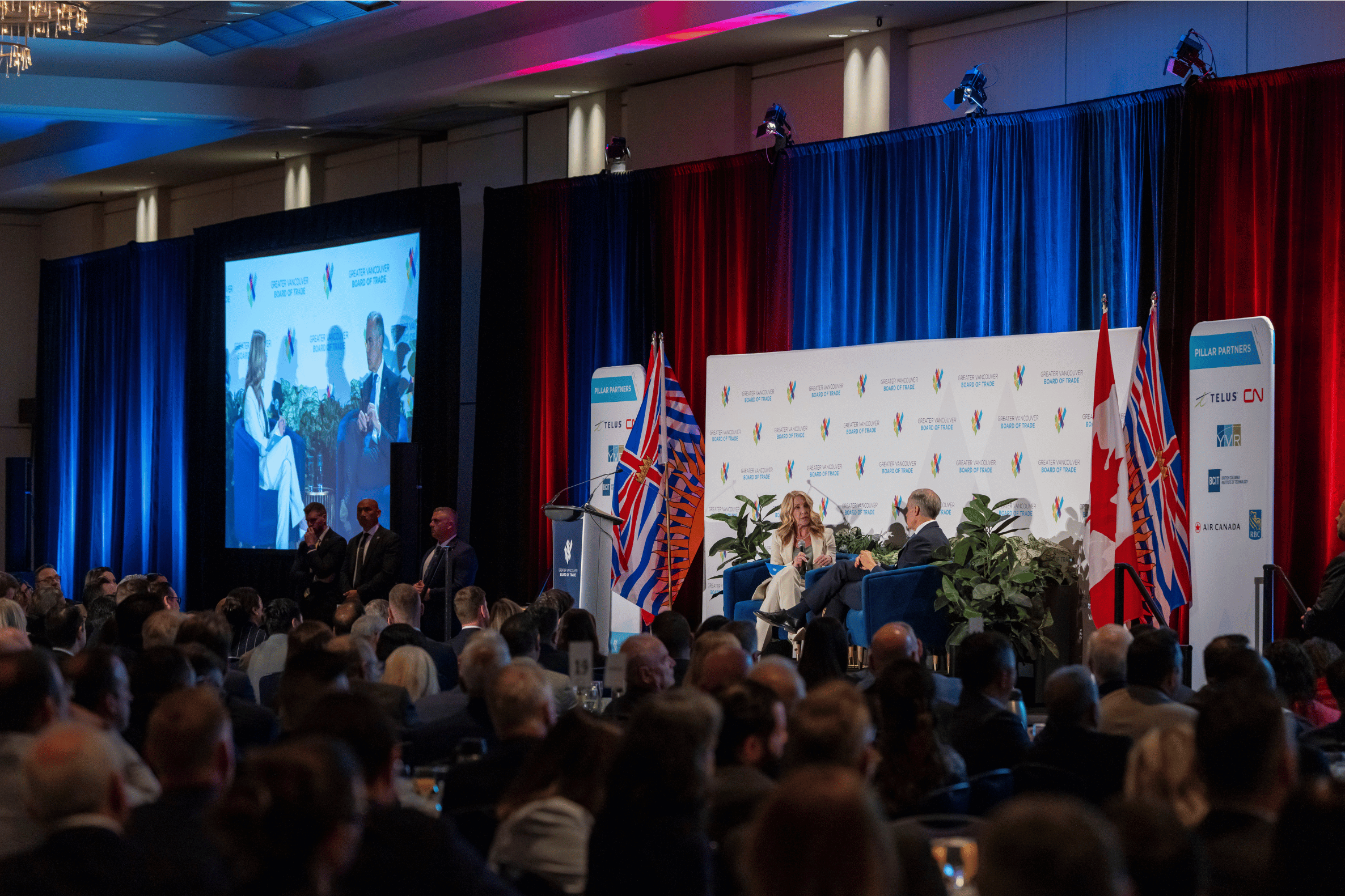
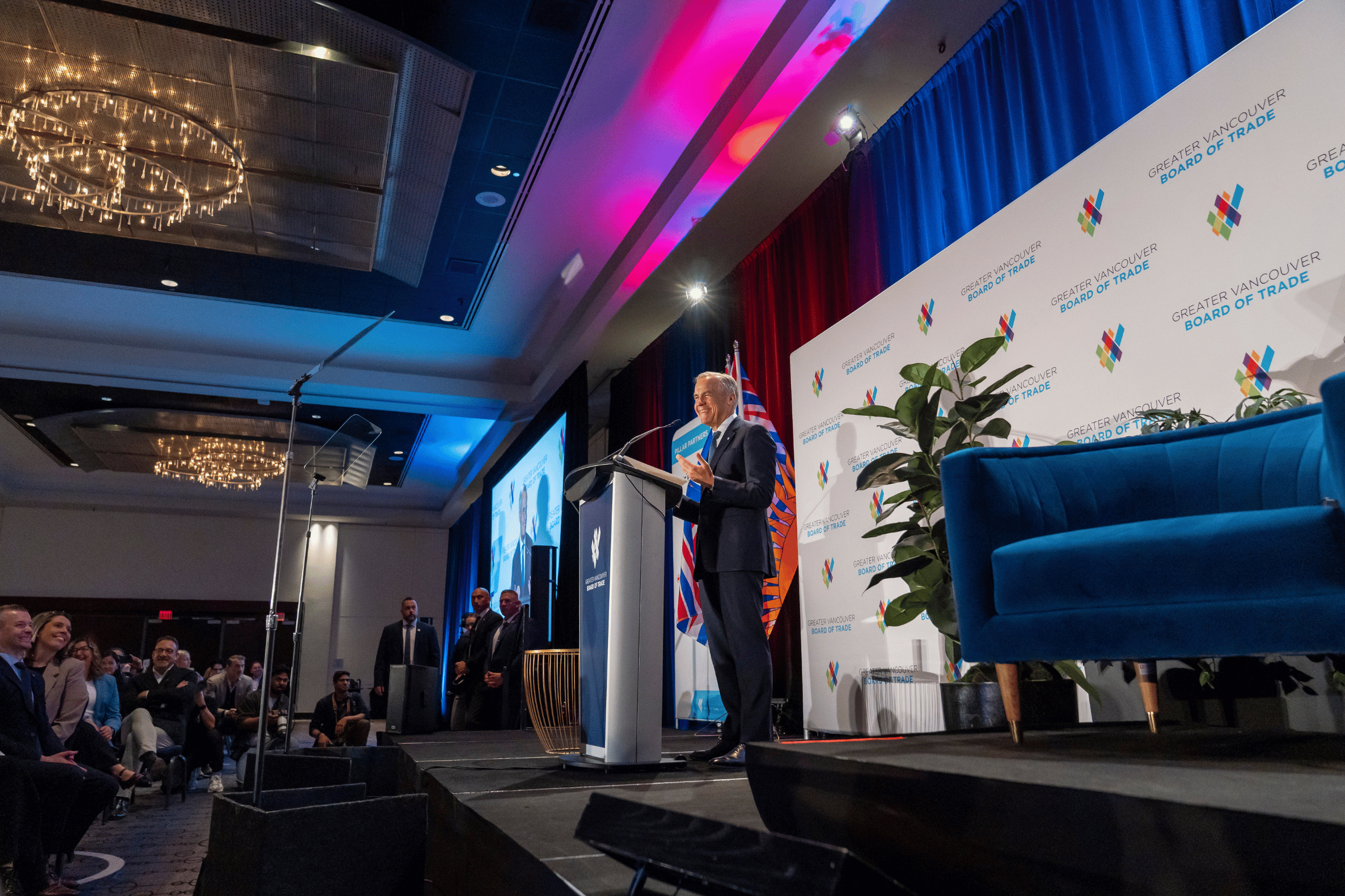
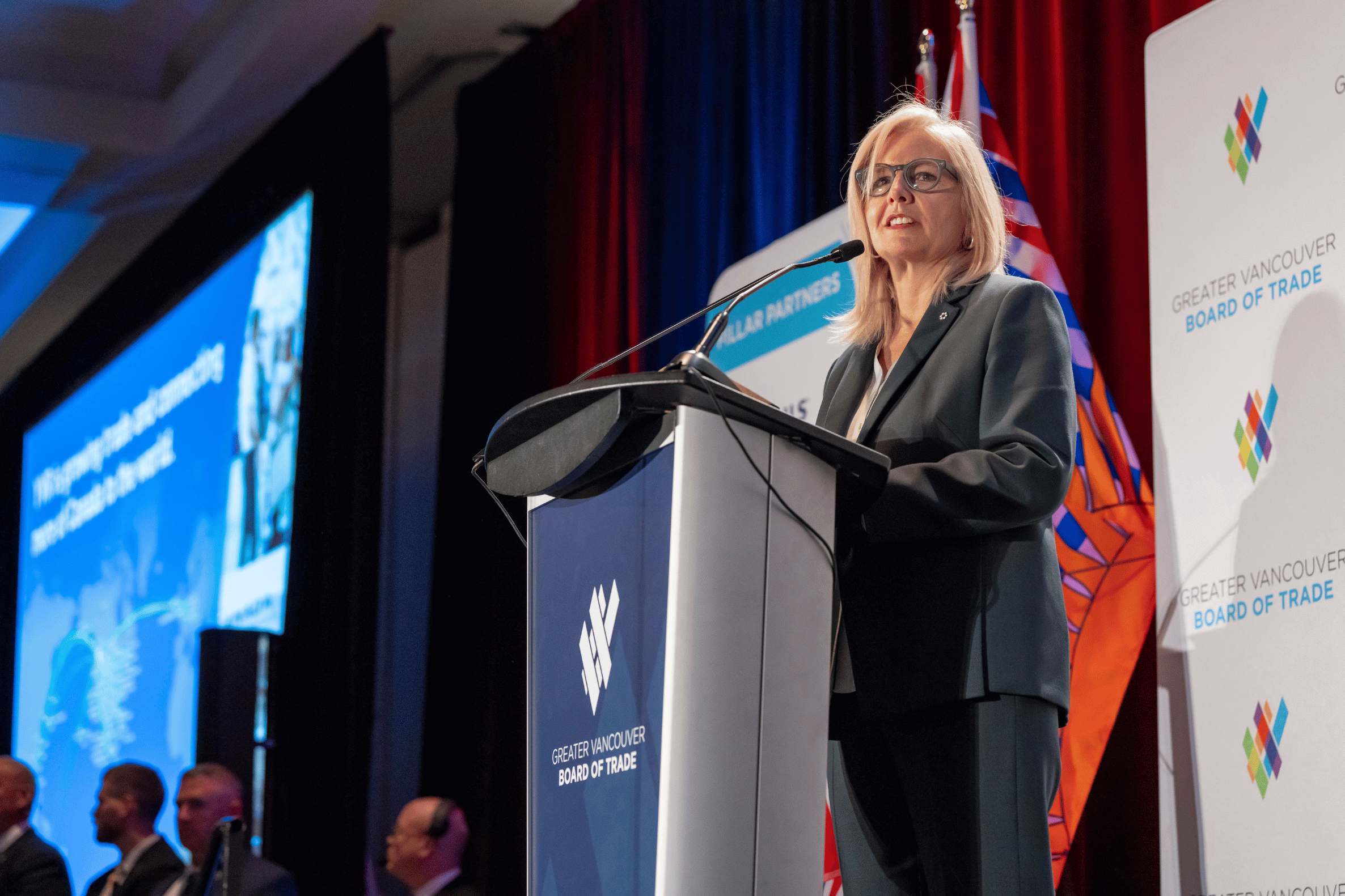
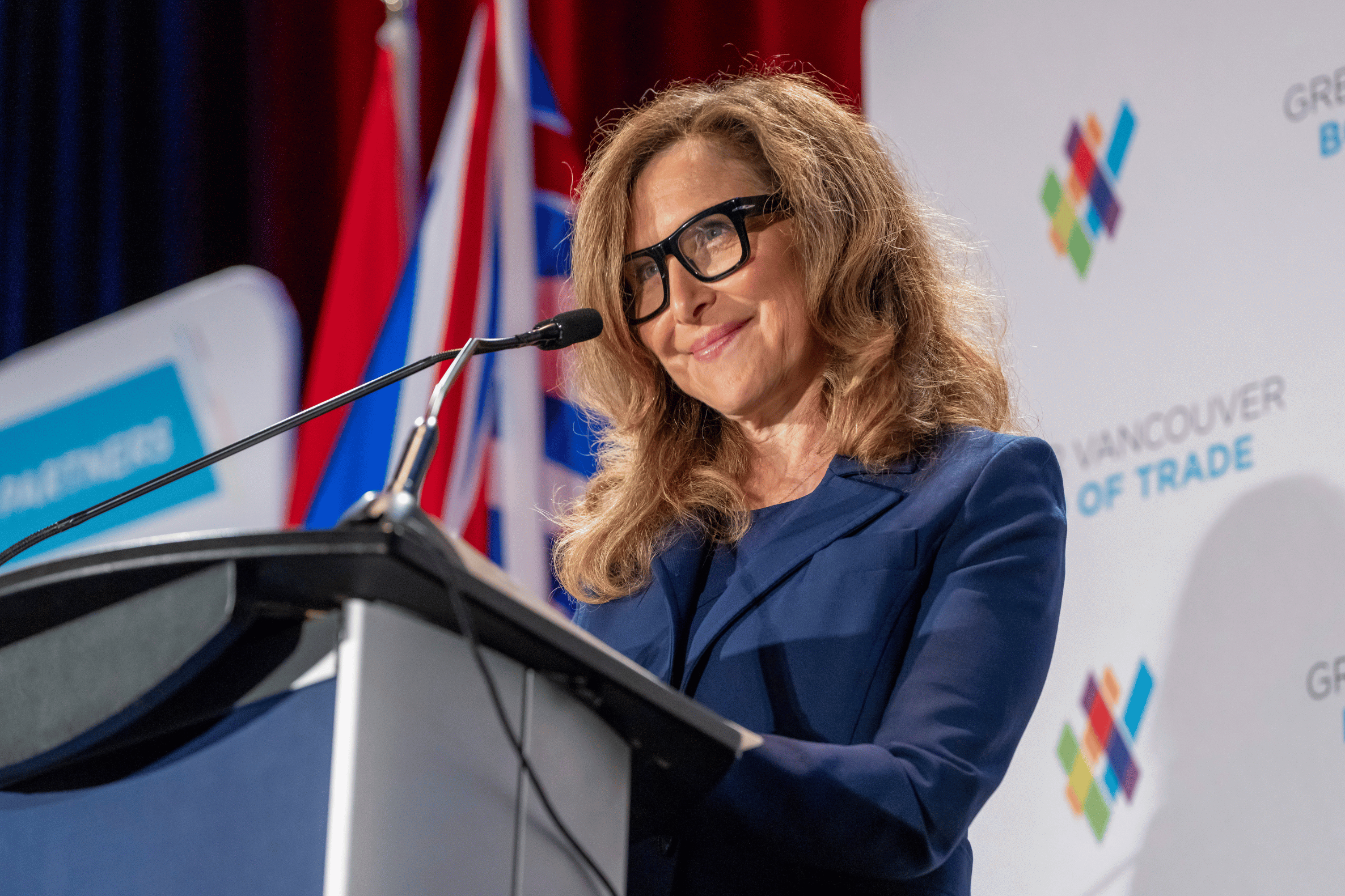
Ottawa Cannot Meet Its Export Goals Without B.C.
In order to build a stronger, more sustainable Canada, Ottawa has made doubling non-US exports by 2035 a federal priority. Carney pointed to the Port of Vancouver, Canada's largest port, as a critical national asset for this goal.
The Port of Vancouver handles more cargo than the next five largest Canadian ports combined, processing a billion dollars in trade daily with 170 countries. At current trajectories, the port will run out of capacity within a decade. Carney stressed that infrastructure investments in rails, roads, airports, and port-feeding channels throughout the Lower Mainland are long overdue, and that Ottawa is tackling this challenge comprehensively.
“Acting now is on multiple levels. It's partnerships with First Nations. It's agreement with the Province of British Columbia. It's the right environmental protections. It's significant investment to ensure that those are delivered, and we're prepared to do that,” he said.
Carney was explicit that a piecemeal approach won't work: “If we don't do it all together with a sense of urgency, it is going to be very hard for us to become materially more independent and resilient as a country.”
Consultation and Collaboration Are Central to Building B.C. Projects
As the federal government looks to build big across Canada, federal regulatory changes are critical to speeding up project development.
Carney discussed how his government has proposed reforms to cap federal review and decision-making timelines at one year, create a single hub for Crown consultation, and eliminate duplication between federal and provincial assessment processes.
Meaningful collaboration is also essential to unlocking major project development. Carney emphasized how sitting down with stakeholders creates a shared understanding and commitment that propels projects forward.
Speaking to the complexities of major project development in B.C. specifically, Carney stressed that showing up and adjusting to what communities want can smooth out roadblocks and pave an effective path forward.
“If things get stalled here, we're going to be spending more time elsewhere in the country because we need to move forward. We need to invest at scale in the country for affordability, sustainability, independence, and prosperity.”
A Final Word for Businesses
In closing out the conversation, Anderson asked Carney what this moment means for the Greater Vancouver business community. His message was direct:
“The world really does want to do more with Canada. They want to invest more here. They want more trade. They want more partnership. So get out there and lead. This is the time you'll find you'll be exceptionally well received. This is the opportunity.”