

2022-23 was an invigorating year as we were able to resume normal business operations, and the results were overwhelmingly positive. The Board of Trade increased influence and impact, enhanced member value and built capacity in local business – as outlined in our 3 Year Strategic Plan.
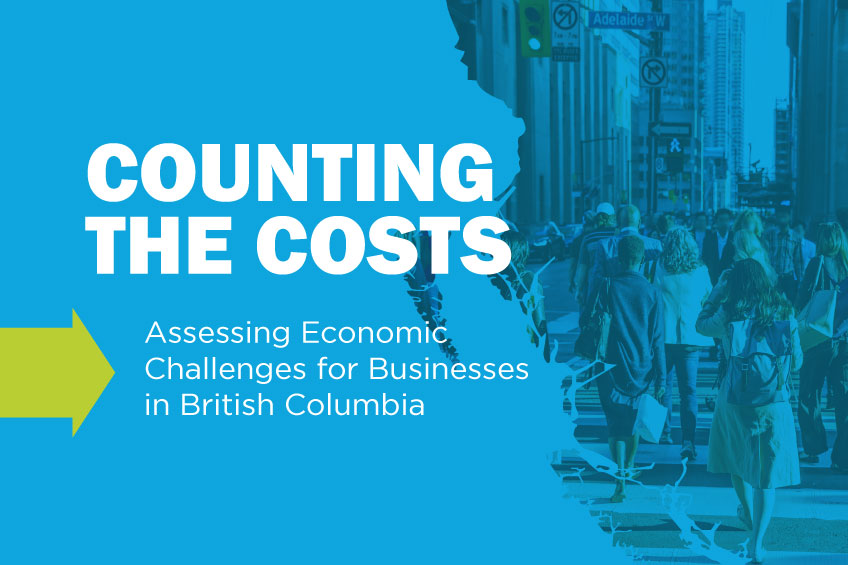
Our policy department released several reports addressing the challenges of B.C. Businesses. They included 2023 Counting the Costs: Assessing Economic Challenges for Businesses in British Columbia, 2023 Solving B.C.’s Workforce Challenges Report, and A Path Forward for the Gig Economy in British Columbia. Throughout the strike in Canada's west coast ports, during which our port shutdown calculator estimated trade losses of $10.7 billion, GVBOT actively voiced its concerns about the national economy and supply chain.
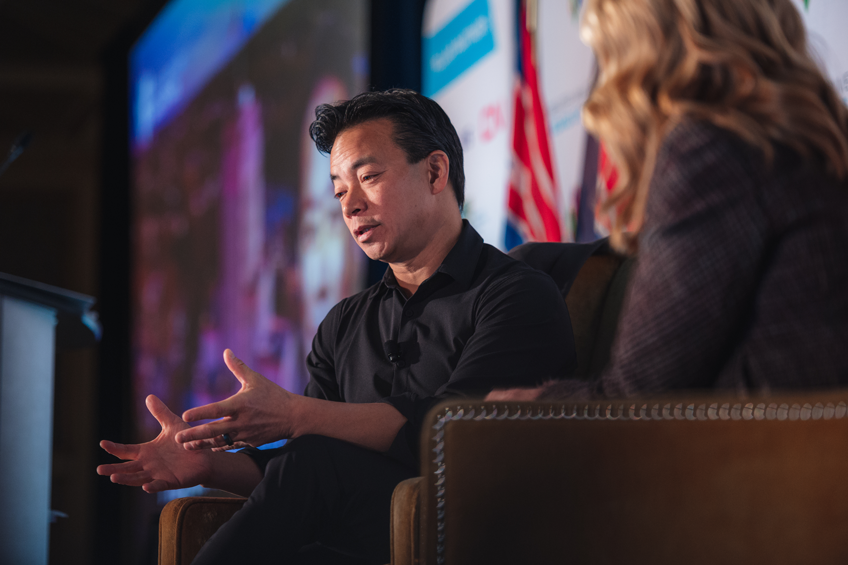
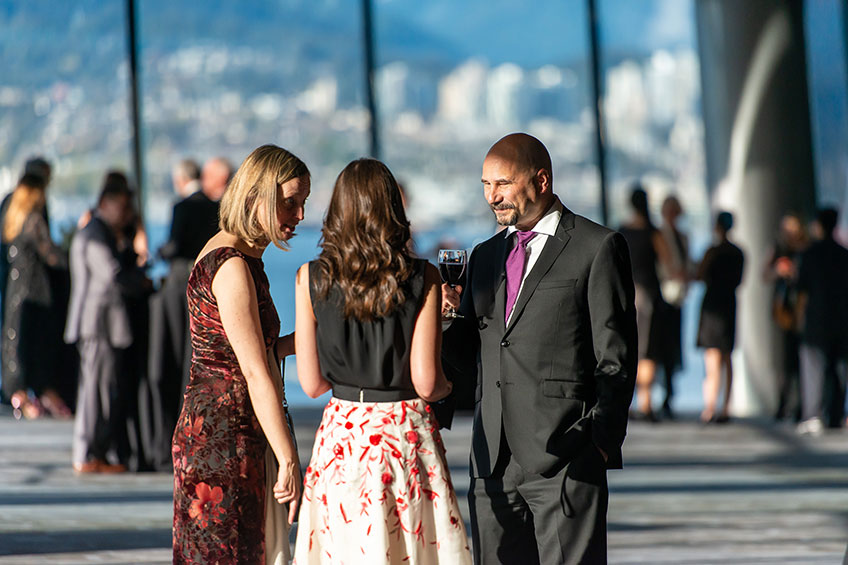
With a busy events calendar, it was exciting to provide an opportunity for members to connect in person. The year kicked off with the inaugural annual address by the new Vancouver Mayor Ken Sim. Our annual Governors’ Gala and Rix Awards in April was an opportunity to induct Kirsten Sutton, ICD.D into the Council of Governors. Wendy Lisogar-Cocchia and Sergio Cocchia were honoured with the Rix Award for Engaged Community Citizenship for their significant philanthropic and fundraising efforts and White Spot was awarded the Rix Award for Engaged Corporate Citizenship for in recognition of the company's depth and length of community relationships. The Scale up Centre for SMEs launched its first Business Distinction Awards recognizing SMEs that have gone above and beyond in the Greater Vancouver region.
Read more about our accomplishments in the 2022-23 year in our Annual Report.
The emergence of the Omicron variant of COVID-19 and the catastrophic climate events in B.C. had a significant impact on our region in the later part of 2021 and early 2022.
In order to help businesses reopen and stay open safely, we supported the introduction of the B.C. Vaccine Card to protect their staff and customers while we also advocated for relief programs for hard-hit sectors like events, tourism and hospitality. Soon after, we were cut off from the rest of Canada as historic flooding destroyed sections of Highway 1 and the Coquihalla in addition to damaging rail lines. Our team worked with governments and industry stakeholders to ensure alternate routes through the U.S. were opened for those displaced from their homes and critical arteries were repaired.
Ahead of the federal election in fall 2021, GVBOT conducted a survey of members and the public in partnership with Mustel Group. In February, our policy team analyzed the StrongerBC Economic Plan and crafted a communications strategy to share how it would impact businesses.
World Trade Centre Vancouver (WTC-V) had a phenomenal year, welcoming Purolator as a Global Partner alongside Air Canada and Fasken. In January, we partnered with the BCIT School of Business and Media to launch the ESG Fundamentals Microcredential, recognizing a shortage of the talent required to help companies measure and report on their environmental, social and governance factors. In June, we partnered with the Business Data Lab at the Canadian Chamber of Commerce for the first time to analyze localized Statistics Canada data on business conditions in Metro Vancouver.
As 2022 progressed and COVID-19 restrtictions began to lift, we were able to transition back to mostly in-person events.
Read more about our accomplishments in the 2021-22 year in our Annual Report.

In a year marked by economic uncertainty, social upheaval and a fundamental restructuring of the workforce, the Greater Vancouver Board of Trade was a critical convenor of the business community, working alongside our members to build a vision for a path forward out of the COVID-19 pandemic.
Hospitality and tourism were severely impacted by health restrictions implemented to stop the spread of COVID-19, so we published the GVBOT Tourism Roadmap alongside InterVISTAS and YVR, outlining a phased approach to ensuring the industry will be able to thrive in the coming years. We also released the 2020 Region in Review report, highlighting metrics on quality of life and economic prosperity in the Greater Vancouver region, and the BC Life Sciences Update 2021, highlighting the challenges and opportunities for our region in the coming years.
In recognition of the evolving need for training around issues of diversity and inclusion, the GVBOT founded a partnership with the Canadian Centre for Diversity and Inclusion (CCDI) and became the first chamber of commerce to join Presidents Group, an organization created to promote accessibility and inclusiveness in the workplace. Our board of directors voted unanimously to adopt the Government of Canada’s 50-30 challenge to increase the number of underrepresented groups on corporate boards.
Read more about our accomplishments in the 2020-21 year in our Annual Report.
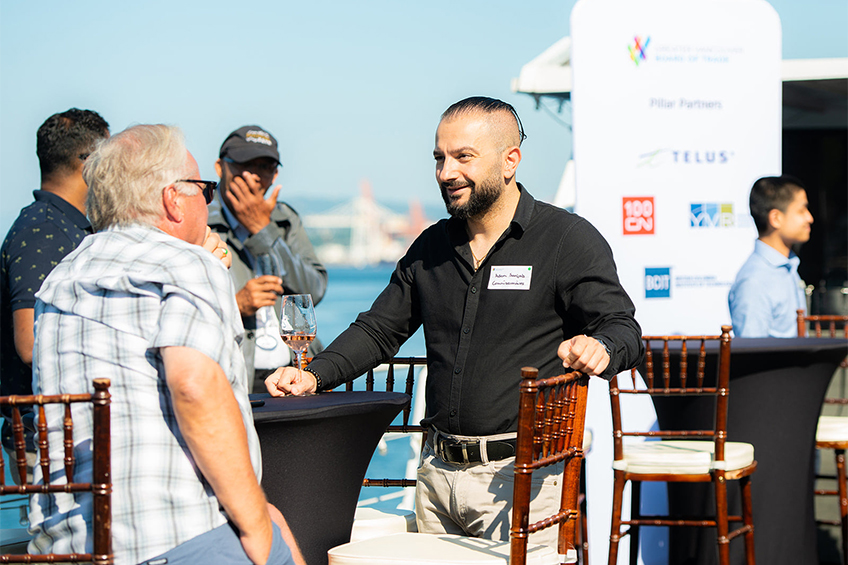
2019-20 was a year unlike any other in the Board of Trade’s history. The arrival of the COVID-19 pandemic changed every aspect of our lives, it also fundamentally altered the way in which we do business, creating challenges no one has ever experienced.
As it has always done during its 133-year history, the Board of Trade swung into action to support our Members. From a Public Policy standpoint we worked tirelessly to advocate on our Members’ behalf, representing their interests at all levels of Government with initiatives such as our Economic Recovery Plan and through a dedicated Dashboard launched to guide business owners through a snap Provincial Election.
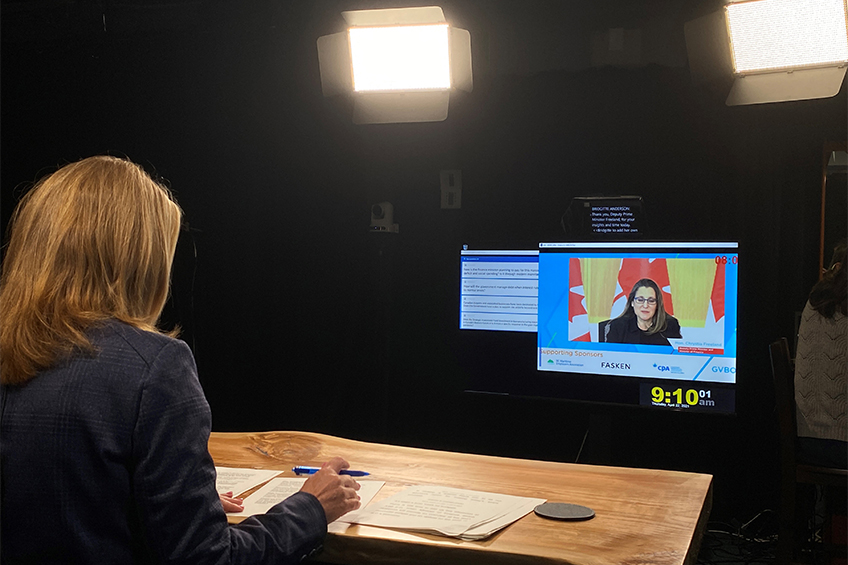
Despite the COVID-19 crisis, our organization pivoted in order to deliver the same high-quality events that it is renowned for. We quickly embraced new technology and new ideas to convert our in-person events into virtual offerings, featuring high-profile speakers and panellists such as Premier John Horgan, TransLink CEO Kevin Desmond and iconic entrepreneur, Arlene Dickinson.
Under the leadership of our New President and CEO Bridgitte Anderson, the Board of Trade was successfully able to navigate through the impacts of the pandemic and pivot to ensure its vitally important work reached more Members than ever before. Learn more about the year in our 2019-20 Annual Report.
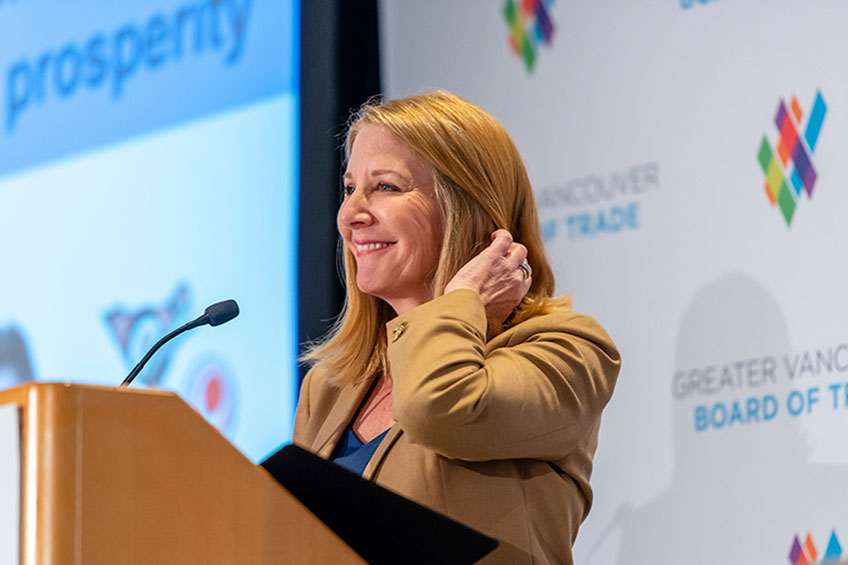
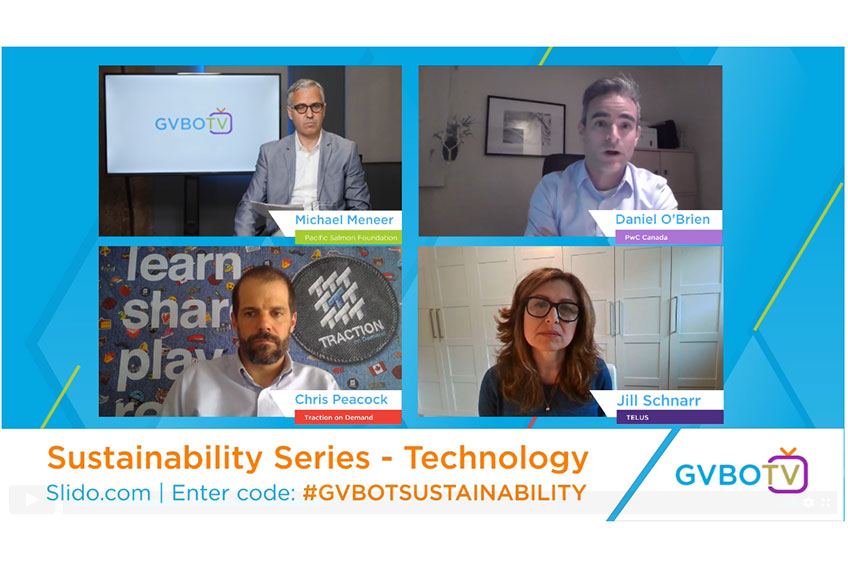
In 2018-19 our team once again delivered a year to remember. The year will undoubtedly be remembered for the March 2019 event with U.S. President Barack Obama. The event was the largest and most complex in our history, with little runway to execute but resulted in well-documented success and profile.
From a public policy standpoint, we tested a few new ideas in advance of the municipal elections including, printing a 2018 Local Elections Handbook and launching an online Election Dashboard where throughout the election campaign, we published, analysis from our Members. Pointedly for our Members, included in these efforts was advocacy with Vancouver City Council regarding a two percent shift of the Property Tax Levy from commercial to residential properties (approved in April 2019).
After seven and a half years, Iain Black stepped down as President and CEO. Following an extensive cross-country recruitment process, we welcomed Bridgitte Anderson, the first female President and CEO in the Board’s history. Learn more about what took place in our 2018-19 Annual Report.
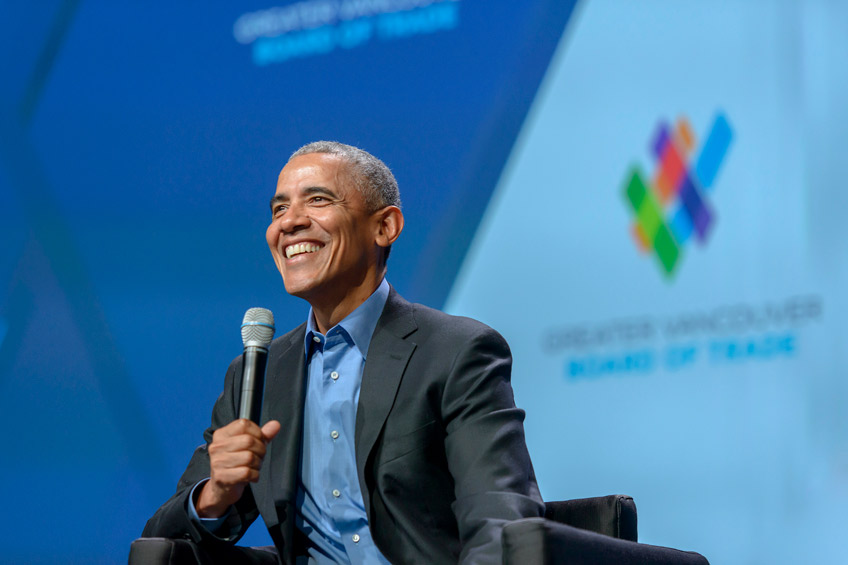
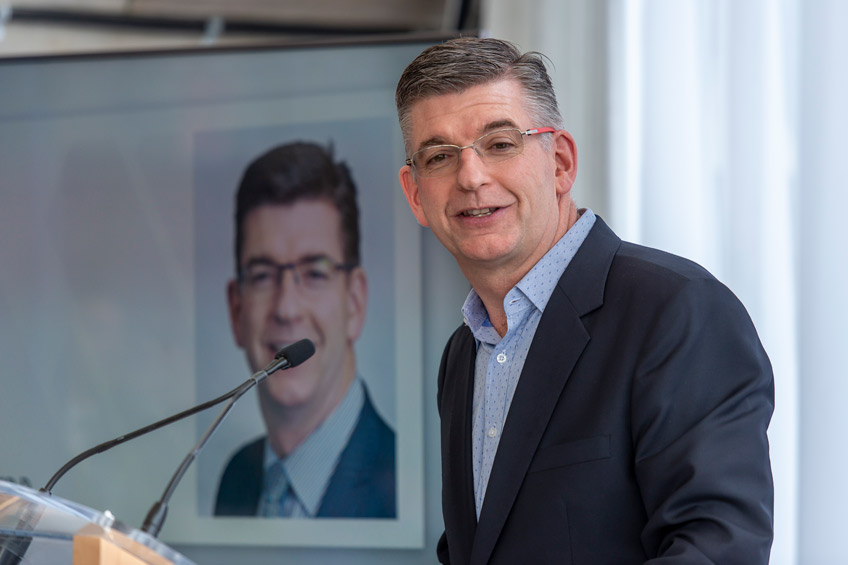
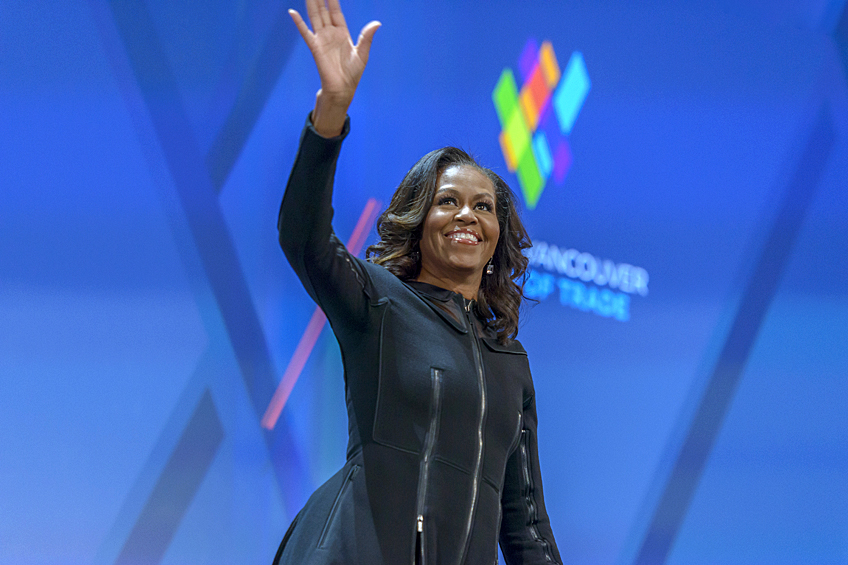
The Greater Vancouver Board of Trade reached new heights in 2017-18, achieving one of the largest surpluses in our organization's history and creating buzz across the country. Without question, one of the most obvious achievements was securing two sold-out events with Former U.S. First Lady Michelle Obama. In addition, the organization also hosted its largest-ever Governor's Banquet, successfully launched the Trade Accelerator Program and trained dozens of local businesses on how to export, released the Greater Vancouver Economic Scorecard 2018, and much more. Other advocacy efforts included our #HitThePauseButton social media and email campaign in response to the federal government's proposed changes to small business taxes, the Federation Flight from Vancouver to Edmonton to show support for the Trans Mountain Expansion Project and Canada's energy industry, our survey and campaign against B.C.'s new Employer Health Payroll Tax, a new report on infrastructure delivery with the Canadian Global Cities Council, and a report on mobility pricing in our region. As a result of these efforts and the leadership of 2017-18 Chair Anne Giardini, the Board of Trade recorded its highest annual new Membership sales ever, and also grew its year-end book of business and increased its already nation-leading Membership renewal rates. Learn more about this truly exceptional year in our 2017-18 Annual Report.
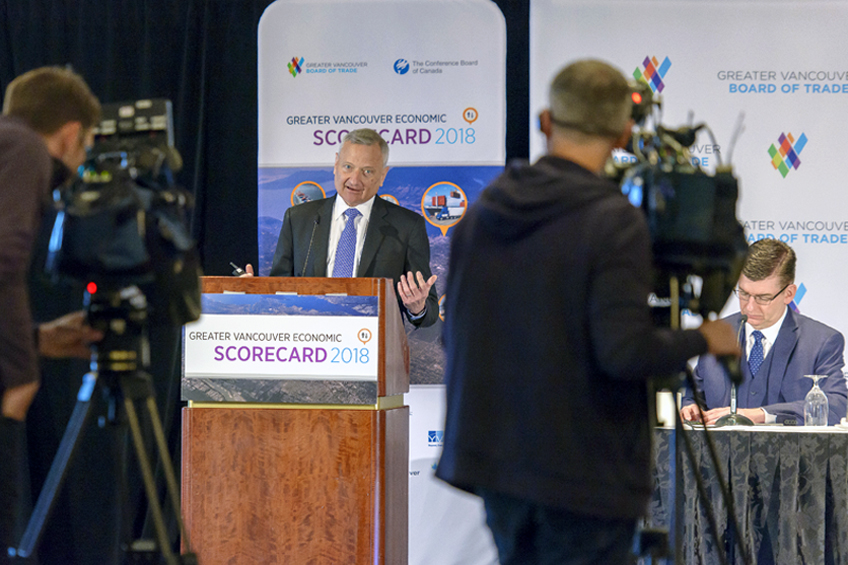
It was another industrious year for the Greater Vancouver Board of Trade, with more than 120 successful events and a number of key public policy initiatives that moved our organization forward. Under the leadership of Chair Robin Silvester, the Board of Trade leveraged the results of the Greater Vancouver Economic Scorecard 2016 — released last May — and resolved to "put the Scorecard to work." This was perhaps most evident in the Board of Trade's report on housing affordability in the Lower Mainland, as well as its 2017 Provincial Election Engagement Strategy, which included the creation of an Election Platform and launch of an online Election Dashboard.
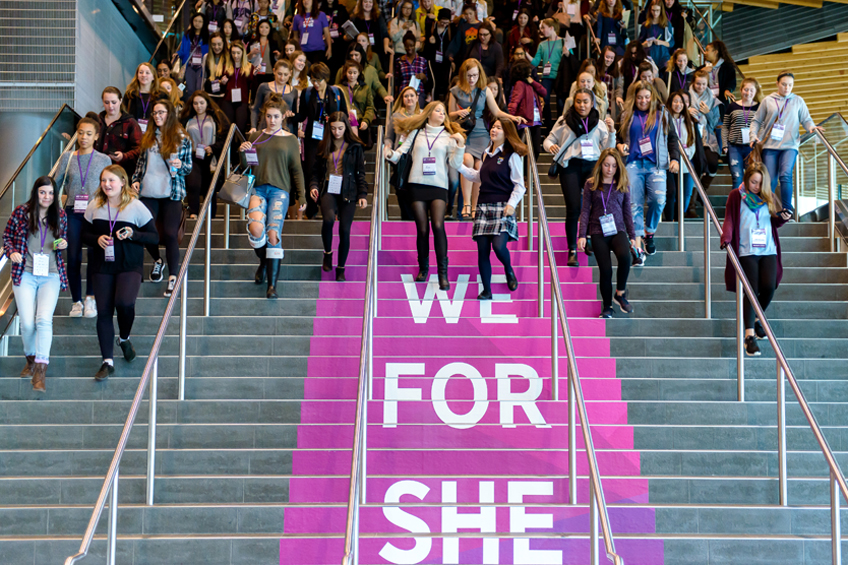
Other highlights for the year included the introduction of GVBOT's Pillar Partners, the expansion of the Company of Young Professionals program to Richmond, North Vancouver, and the Tri-Cities, a new advocacy initiative with the Canadian Global Cities Council, and the WE FOR SHE Conference on gender diversity. It was also announced in April 2017 that the Board of Trade will enter a $2.5-million partnership with the Government of British Columbia to re-establish the World Trade Centre Vancouver. (Read our Annual Report)
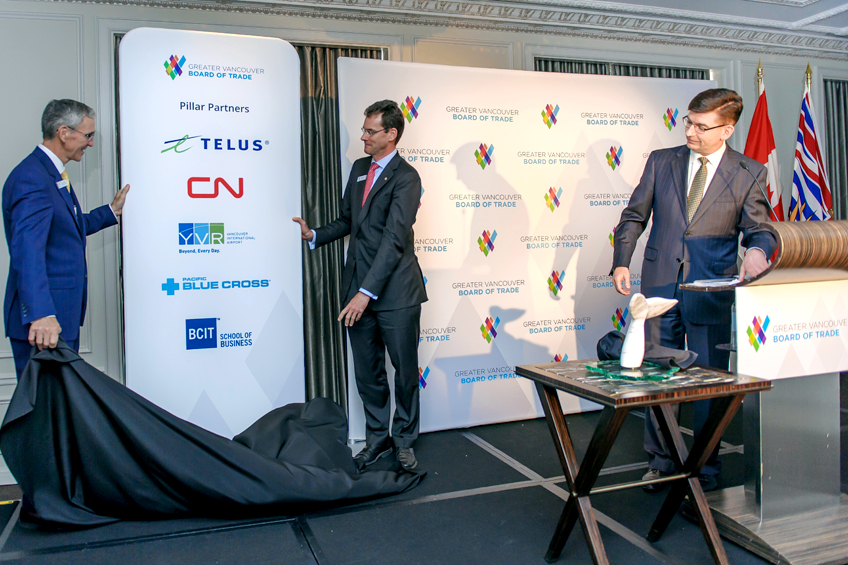
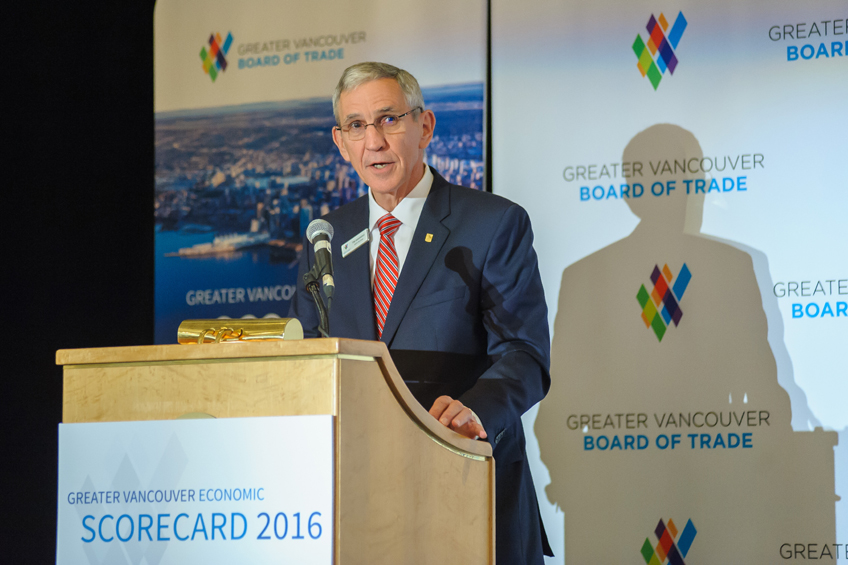
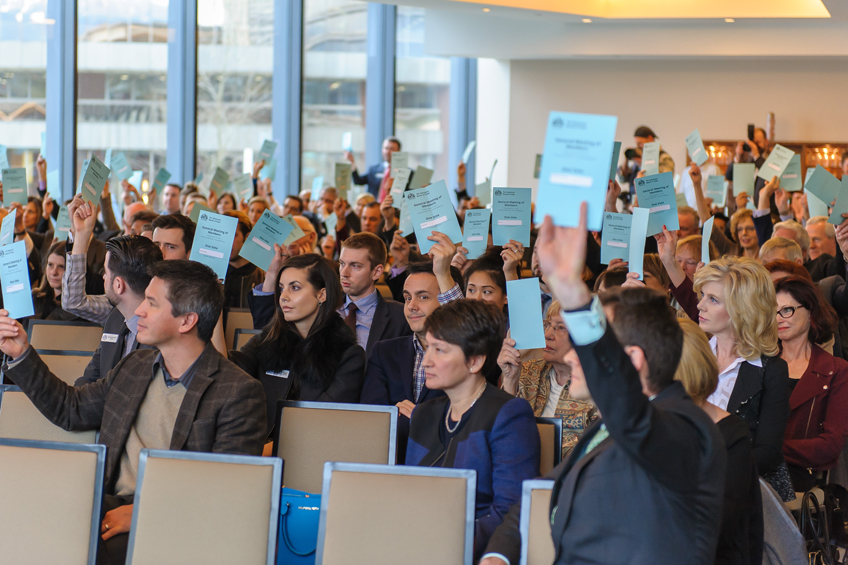
The 2015-16 year was a transformational year, in which the organization officially adopted the name Greater Vancouver Board of Trade, following a historic vote by its membership in January 2016. The new name was chosen by Members because it better reflects the regional focus, policy work, and Membership of the organization — which spans far beyond city limits. In addition, the Board of Trade also released the Greater Vancouver Economic Scorecard 2016 — an unprecedented study that compares and measures our region against 19 others from around the globe.
Other highlights included a report on ridesharing and innovative transportation options, the passing of seven policy resolutions at the BC Chamber AGM in Kelowna, advocating for transit and transportation funding in the Lower Mainland, the redesign of the Sounding Board newspaper, and the unveiling of a new logo and new website.
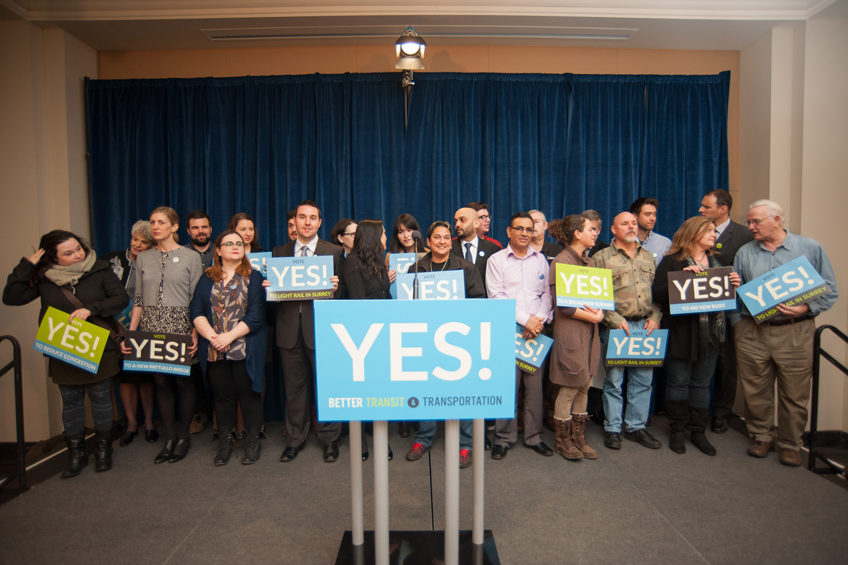
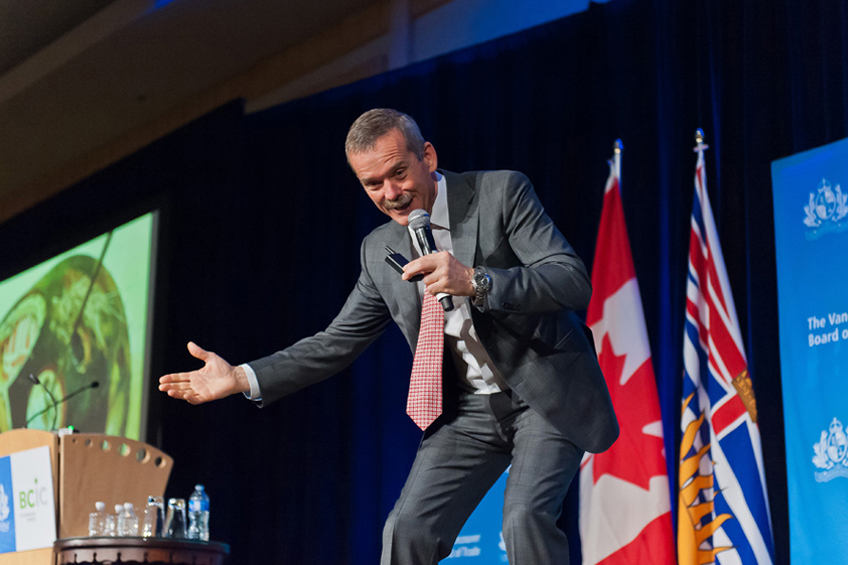
"Collaboration" was the theme of The Vancouver Board of Trade's 2014-15 year. Under the leadership of Chair Janet Austin, the Board hosted 142 events with a cumulative audience of more than 23,000 people! These events included the B.C. Tech Forum featuring Chris Hadfield (in partnership with the BC Innovation Council), the B.C. Economic Forum (in partnership with the WEB Alliance of BC), and the Clean Energy Forum (in partnership with Clean Energy BC). In addition, the Board of Trade was also a founding member of the Better Transit and Transportation Coalition — the most diverse coalition in B.C.'s history, comprised of 145 different organizations.
In another unprecedented cooperative initiative, The Vancouver Board of Trade supported the efforts of the Richmond Chamber of Commerce and partnered with 12 other chambers of commerce across the Lower Mainland and Fraser Valley to release a landmark research study on the economic importance of the Fraser River. The Board also hosted Vancouver's two leading Mayoral candidates — Gregor Robertson and Kirk LaPointe — for moderated Q&A events in the lead-up to the 2014 municipal election and had two policy resolutions passed at the Canadian Chamber of Commerce AGM in Charlottetown, PEI.
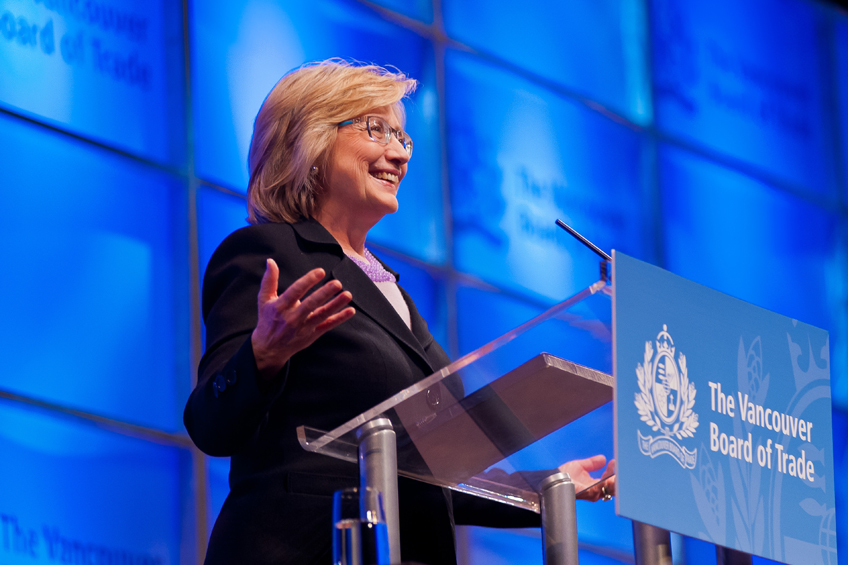
The Vancouver Board of Trade closed the 2013-14 fiscal year with a staggering 1,006 new Members, growing in net Memberships for the first time in a decade and bucking a trend for chambers of commerce worldwide. In addition, just hours into its new fiscal year, the organization signed a historic agreement to join forces with the Kitsilano Chamber of Commerce. Under the leadership of Chair Elio Luongo and President and CEO Iain Black, The Vancouver Board of Trade also restored its balance sheet in 2014, eliminating its deficit within just two years — a full three years ahead of a board-approved plan. And in March 2014, The Vancouver Board of Trade welcomed former U.S. Secretary of State Hillary Rodham Clinton, drawing an astounding 2,781 people and setting a record for the largest event in our organization's 127-year history.
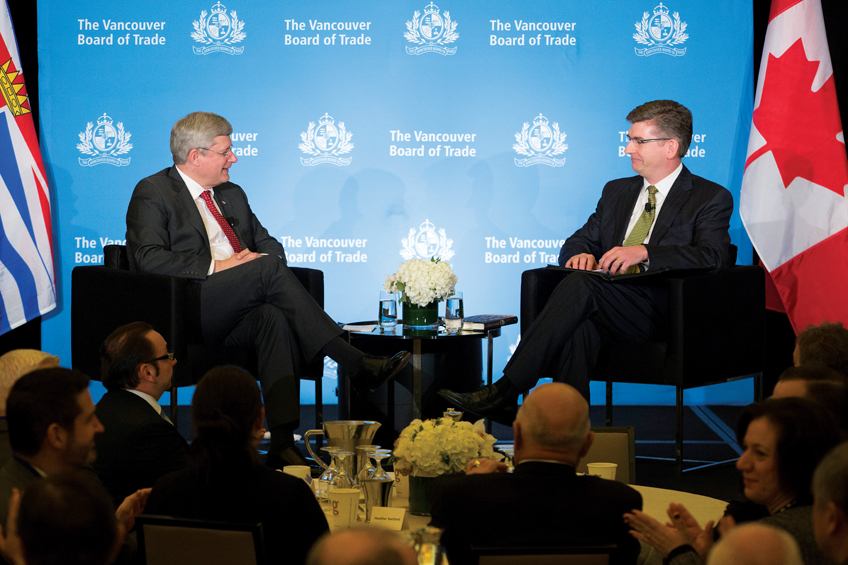
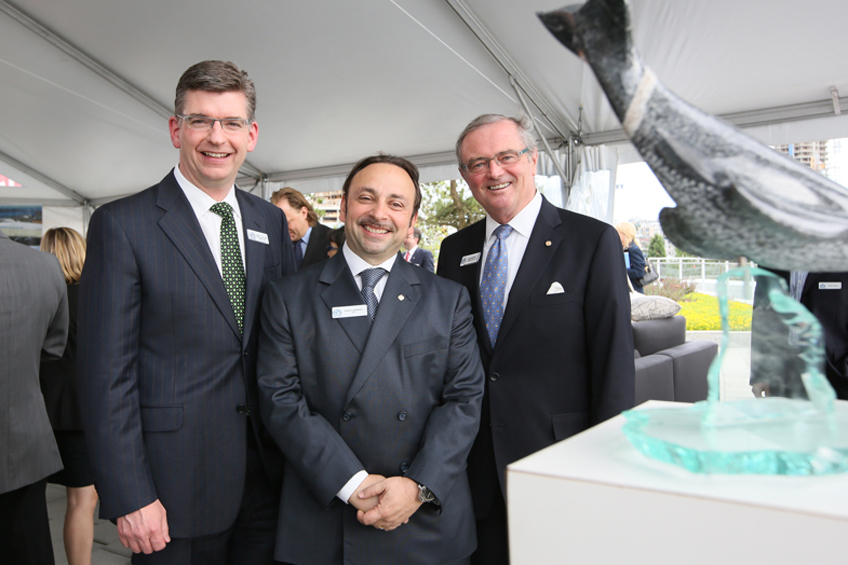
Under the leadership of Chair Ken Martin, The Vancouver Board of Trade launched its new Policy Council, in order to better coordinate the work of its committees and re-establish a strong voice in the policy arena. The Vancouver Board of Trade advocated on behalf of the city's business community on issues such as the proposed Pooled Registered Pension Plan (PRPP) legislation, the City of Vancouver's Transportation 2040 Plan, the proposed replacement of the George Massey Tunnel, the proposed removal of Vancouver's downtown viaducts, the need for mobile business licenses in Metro Vancouver, and the importance of Open Skies legislation to support growth at Vancouver International Airport.
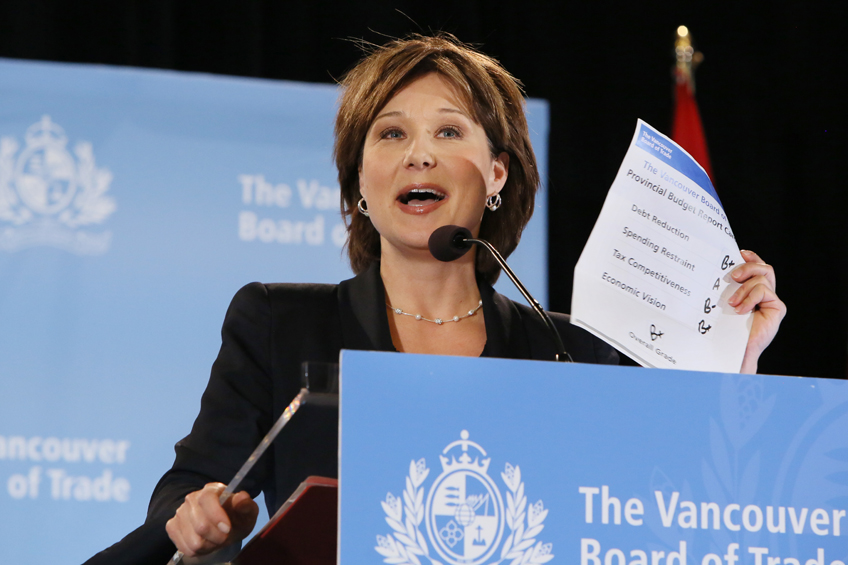
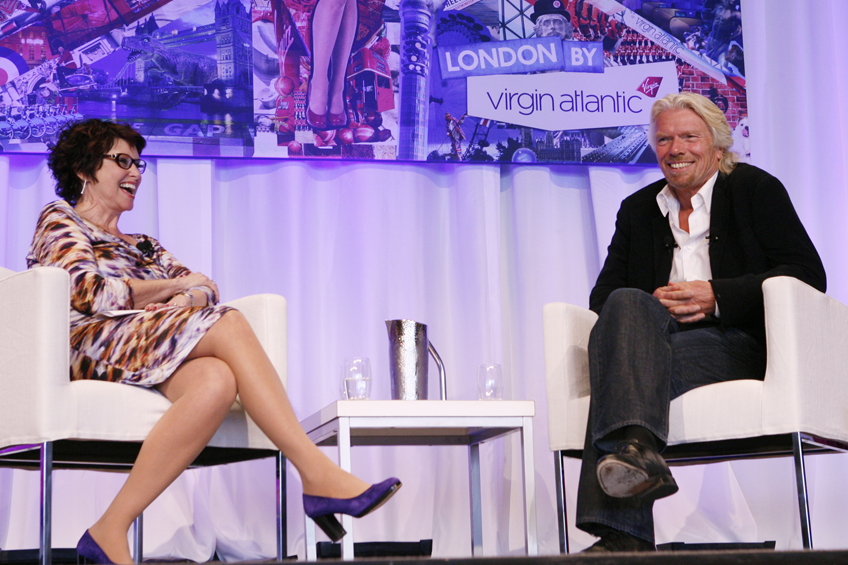
The Vancouver Board of Trade released a landmark report entitled Psychologically Healthy Workplaces: Improving Bottom Line Results and Employee Psychological Well-Being. Chair Wendy Lisogar-Cocchia led an urban economic mission to London, England and Milan, Italy. Following a comprehensive multi-year review process, a refreshed set of bylaws were passed at The Vancouver Board of Trade's 125th AGM, reflecting best practices in association governance. In May 2012, The Vancouver Board of Trade hosted an event with Virgin Founder Sir Richard Branson, which drew more than 1,400 attendees to the Vancouver Convention Centre.
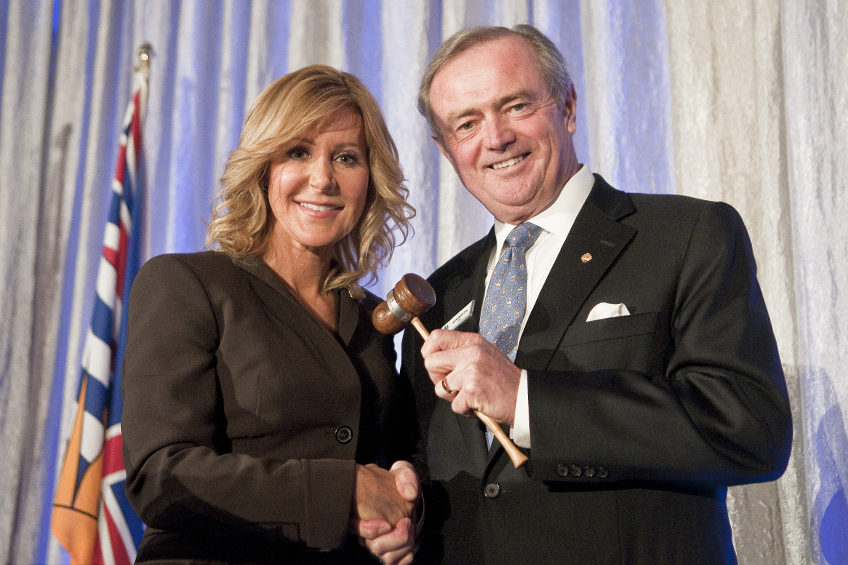
The Vancouver Board of Trade released reform recommendations in its report, The Joint Pursuit of Value, joined the Smart Tax Alliance in support of retaining the HST, and hosted its inaugural Aboriginal Opportunities Forum. In August 2011, The Board of Trade announced the appointment of new President and CEO Iain Black.
Another one-per-cent shift per year in Vancouver property tax reductions for businesses equated to an estimated $43 million savings per year for business. The Vancouver Board of Trade released a follow-up Kids 'N Crime Economic Report.
An anti-crime mission met leading politicians in Ottawa and Statistics Canada recognized police-reported crime alone should not define "the national crime rate." The Metro Roundtable for municipalities was founded. The Vancouver Board of Trade welcomed the first Canada Line train to Waterfront Station and was officially thanked at the opening ceremony for saving it. The Rix Awards for Corporate Citizenship and Engaged Leadership were founded by Chair Dr. Don Rix, C.M., O.B.C. and presented the inaugural engaged citizenship awards ceremony.
The Vancouver Board of Trade launched the Women's Leadership Circle, to connect remarkable business, community and political leaders through high-caliber speaker events, exclusive roundtables, networking receptions, and more.
As a founding member of the Fair Tax Coalition, The Vancouver Board of Trade played a lead role in achieving a one-per-cent reduction in business property taxes, bringing the total tax reduction to 10.2 per cent. The Board released its report, Reforming the Canadian Health Care System and launched the Company of Young Professionals (CYP) program.
Construction started on the saved Richmond Airport-Vancouver line, which would later be known as the Canada Line. The Vancouver Board of Trade hosted the 2,100-delegate Hong Kong-Guangdong Business Forum in Canada.
The Vancouver Board of Trade formed a coalition and successfully demanded a re-vote by the 2005 TransLink board to save the Richmond-Airport-Vancouver rapid transit line (known today as the Canada Line). Hosted the inaugural meeting of the Greater Vancouver Chambers Roundtable, for all surrounding chambers of commerce to introduce plans for the 2010 Winter Olympics.
Released a Report on Property Crime in Vancouver and hosted workshops and forums promoting the 2010 Winter Olympics bid, which was won.
An Olympic Countdown Clock was lowered by helicopter in Canada Place to support the bid for the 2010 Winter Olympics.
Launched a new initiative called the Spirit of Vancouver to revitalize community spirit and save the annual fireworks festival.
Introduced the Leaders of Tomorrow Mentorship Program.
Canadian finance minister Paul Martin stopped The Vancouver Board of Trade's Debt Clock with a balanced budget.
The Vancouver Board of Trade and Volunteer Vancouver co-founded the Leadership Vancouver Society. Thanks to The Vancouver Board of Trade's advocacy, the federal government approved the creation of the Vancouver Airport Authority, transferring management of YVR airport from the federal government to a local, community-based, not-for-profit organization.
Wendy McDonald, C.M., O.B.C., became the first woman to serve as Chair of The Vancouver Board of Trade. During her term, McDonald launched a federal debt clock that travelled across Canada while constantly calculating the rising federal debt, and was later featured nightly on BCTV news hour. McDonald also led a Vancouver Board of Trade delegation to Ottawa and Washington, D.C., to lobby for fast border lanes. This advocacy led to the creation of what is now known as the NEXUS system.
The Vancouver Board of Trade celebrated its centennial by establishing its Council of Governors, a prestigious group comprised of those who had previously served as Chair. In addition, The Vancouver Board of Trade continued its push for the devolution of Vancouver International Airport to a local airport authority and spoke out on the need for airport expansion. This work came to fruition five years later with responsibility for airport operations being transferred from Transport Canada to a local airport authority, and with the approval for construction of a third runway.
The Vancouver Board of Trade became the first tenant to move into the World Trade Centre office tower at Canada Place and hosted the General Assembly of the World Trade Centers Association. The Board of Trade also proposed establishing Canada's first local airport authority in Vancouver.
The Vancouver Board of Trade was voted into membership of the World Trade Centres Association at the WTCA General Assembly in Melbourne, Australia. The Board immediately bid to host the General Assembly during 1986 — Expo year.
The Board of Trade predicted conventions and tourism would become a major industry in North America and called for the city to proactively embrace that opportunity. In addtion, The Vancouver Board of Trade campaigned for a metro transit authority and monitored regional transportation. The Board also worked closely with the Vancouver School Board and sponsored a Business Administration program at Vancouver City College.
The Board of Trade raised $2.3 million for the B.C. Flood Emergency Fund.
Then-Board of Trade president T.S. Dixon worked with the BC Medical Association and chaired the first meeting to found a cancer institute, which would later become the British Columbia Cancer Foundation.
The Board helped establish a Faculty of Commerce at the University of British Columbia and was instrumental in the formation of the Canadian Chamber of Commerce. The Board was also involved in the development of the Community Chest, predecessor of the United Way. Grew to 10 "bureaus" and 10 standing committees to lobby all levels of government. Campaigned on freight rates, in favour of the Trans-Canada Highway, and for a large city airport.
B.C. Electric gave land for Capilano Park to The Vancouver Board of Trade, which it later turned over to the Vancouver Parks Board. Today, Capilano Suspension Bridge is one of the area's most popular tourist attractions.
Membership rose to 1,000. The Vancouver Board of Trade persuaded the federal government to dredge the First Narrows for shipping.
The Board was instrumental in establishing Daylight Saving Time in Vancouver. During the war, Vancouver Board of Trade Members headed many Victory Bond drives.
The Board pushed for a new city hall and post office. Also this year, The Board estimated that it cost 50 per cent more to ship freight eastward than westward. Its battle for fairer freight rates continued through to 1914 — the year the Panama Canal opened, leading to lower freight rates for B.C. lumber.
An undersea cable was laid from Vancouver to Sydney after The Vancouver Board of Trade lobbied for a communications link between Western Canada and Australia.
A five-day steamer service from Seattle to Alaska via Vancouver was inaugurated as a result of pressure from The Vancouver Board of Trade. In addition, the Board also pointed out the need for a railway through the Crows Nest Pass to open up the Kootenays — a development that later played a major role in stimulating the economy of British Columbia.
The Vancouver Board of Trade began a four-year lobbying effort in Ottawa to make Vancouver the final link in the first telegraph cable to span the globe. When the first message travelled from Australia to London, England, via Fiji, Hawaii and Vancouver on Oct. 30, 1902, there was jubilation throughout Vancouver.
The Board called for the completion of the road from Hope to Princeton. The discovery of gold in the Yukon established Vancouver as the "gateway to the north." The Vancouver Board of Trade mounted a successful advertising campaign promoting Vancouver as an outfitting point for miners. In response to Board requests, a government assay office was opened in 1899.
In response to a request from The Vancouver Board of Trade, the dominion government announced the installation of salmon hatcheries on the Skeena and Fraser rivers. At that time the value of a year's salmon fishery in B.C. was $3 million.
City of Vancouver Mayor David Oppenheimer becomes the first President of The Vancouver Board of Trade, a position which he held for four years.
On September 22, a group of 31 men — merchants, lumbermen, bankers and manufacturers — each paid $20 and agreed to form The Vancouver Board of Trade, in order to rebuild the city after it was devastated in the Great Fire of 1886.
The group wasted no time in making their presence felt. At their first meeting, the group appealed to Ottawa for the installation of a lighthouse at First Narrows, and sent off 11 proposals to the provincial secretary. Included were requests for the city's first resident judge, the city's first courthouse, a land registry office, school improvements, a new bridge over the North Arm of the Fraser River, and a new post office. The Board of Trade also called for the abolition of dual direct taxation (city and provincial) on personal property in Vancouver.
Some of the organization's founding members are still familiar names more than a century later, including realtor Henry Ceperley (whose name is seen today on Ceperley Park in Stanley Park), Hastings Saw Mill's R.H. Alexander, real estate broker M.A. McLean, and the city's second Mayor, David Oppenheimer (whose name is seen today on Oppenheimer Park).